
By Mondy Selle Gold
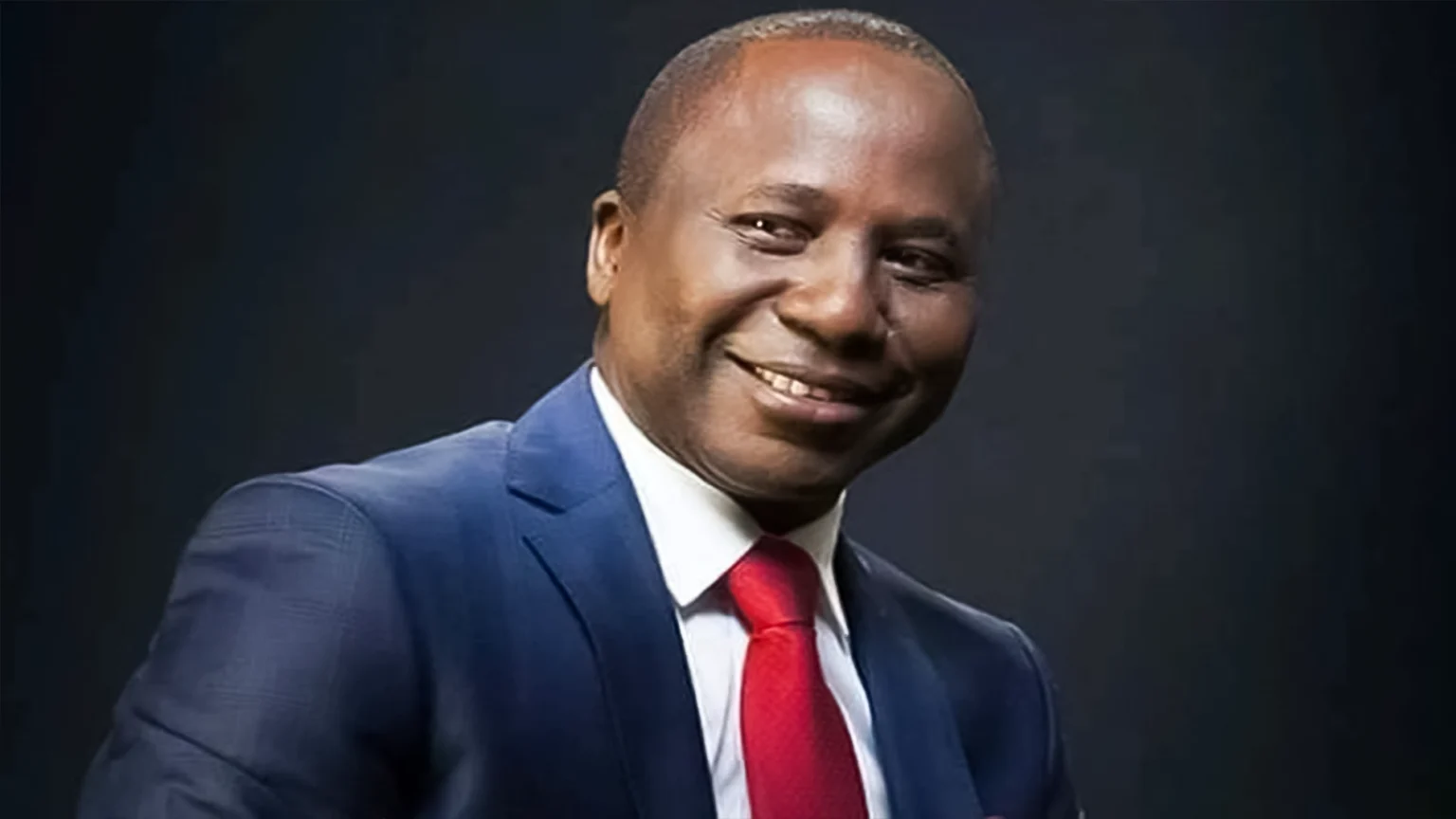
In formally entrusting Professor Stephen Sinikiem Azaiki with the Directorship of the Centre for Polish and African Affairs, Poland on May 4, 2026, the distinguished Wyższa Szkoła Komunikacji i Zarządzania in Poznań has demonstrated remarkable institutional foresight and scholarly discernment, grounded in a recognition of Azaiki’s exceptional professional competence, intellectual sophistication and multidimensional versatility. The appointment recognizes a man whose life path has become inextricably intertwined with statesmanship and strategic leadership.
For the Ijaw nation, whose population is estimated at nearly twenty million people across the Niger Delta region of Nigeria and the global diaspora, this moment carries immense emotional gravity and historical symbolism. It resonates not merely as personal recognition for one accomplished leader in Nigeria from Bayelsa State, but as a broader vindication of a people whose contributions to national development and global intellectual advancement have often remained inadequately acknowledged. Despite decades marked by ecological devastation, political marginalization, economic exploitation, and historical neglect, the Ijaw people continues to produce minds of extraordinary brilliance capable of shaping international discourse and redefining the contours of African scholarship. Consequently, Professor Azaiki’s emergence on such a prestigious global platform symbolizes the continuing intellectual renaissance of the Ijaw people and, by extension, the enduring resilience of the Niger Delta spirit.
Indeed, Stephen Sinikiem Azaiki’s journey has consistently reflected uncommon fortitude, refined intellect, and unrelenting dignity. Since my first encounter with him during one of the most consequential gatherings of Nigerians in the illustrious city of Atlanta, United States, in 2002, he has remained a leader of exceptional cerebral depth and remarkable composure. Much like an ancient lighthouse standing resolutely against relentless tides and turbulent storms, he has embodied the rare capacity to illuminate pathways for others while remaining steadfast amidst adversity. His life has never been circumscribed solely by the pursuit of personal acclaim, based on my personal experience. Rather, it has been animated by an enduring commitment to societal advancement through scholarship, diplomacy, governance, historical consciousness, and principled leadership. In this regard, his appointment appears not accidental, but profoundly providential.
Significantly, Europe hosts several globally respected institutions dedicated to African affairs and transcontinental scholarship, including the University of Oxford African Studies Centre, the University of Edinburgh Centre of African Studies, the University of Copenhagen Centre of African Studies, and the Africa Initiative of the European University Institute in Italy, which provides advanced research, education, and policy engagement concerning African affairs. Within this distinguished intellectual ecosystem, the Centre for Polish and African Affairs increasingly occupies a strategic and consequential position in strengthening intercultural understanding, promoting scholarly cooperation, advancing research excellence, and deepening diplomatic engagement between Africa and Europe.
This reality becomes even more critical in an age characterised by ideological fragmentation, geopolitical uncertainty, cultural polarization, and growing global distrust. That is why, in my opinion, institutions capable of fostering mutual respect between civilizations and facilitating meaningful scholarly dialogue have become indispensable pillars within the international order. Professor Azaiki’s appointment therefore places him at the epicenter of some of the most consequential intellectual and diplomatic conversations shaping Africa–Europe relations in the twenty-first century.
Without question, his intellectual temperament renders him exceptionally qualified for such a consequential responsibility. Over the course of his distinguished career, he has occupied several strategically significant positions spanning multiple continents, from Nigeria to Ukraine, from Washington, D.C. to the United Kingdom, and from China to South Africa. These global engagements have afforded him the rare privilege of interacting with eminent dignitaries, policymakers, scholars, and international thought leaders, while also serving on numerous occasions as a keynote speaker and presenter of scholarly papers on critical global issues in no fewer than fifty countries. Such extensive international exposure has further strengthened his increasingly rare ability to navigate seamlessly the interconnected worlds of academia, governance, public policy, diplomacy, cultural identity, and historical interpretation.
In an era where such multidimensional versatility has become exceedingly scarce within contemporary leadership structures, Professor Azaiki stands out as a leader of remarkable intellectual adaptability and global relevance. More importantly, he understands with profound clarity that modern diplomacy is no longer confined exclusively to conference chambers, presidential villas, or ministerial negotiations; rather, it is equally advanced through ideas, narratives, historical memory, scholarly exchange, and the deliberate cultivation of intercultural understanding.
For Nigeria, this appointment carries profound national significance. It projects the country’s intellectual capital onto the global stage and reinforces the enduring truth that Nigeria’s greatest resource extends far beyond mineral wealth or petroleum reserves. The nation’s most valuable asset remains the brilliance, creativity, resilience, and scholarly sophistication of its people. Through Professor Azaiki, the international academic community recognizes a distinguished Nigerian from Bayelsa State whose scholarship, leadership, and statesmanship reflect some of the finest dimensions of African excellence.
Even more importantly, his elevation challenges longstanding stereotypes that have too often reduced Africa to simplistic narratives of dependency, instability, and perpetual crisis. Appointments of this magnitude compel the international community to recognize Africa not as a continent perpetually awaiting salvation, but as a formidable reservoir of wisdom, innovation, intellectual sophistication, leadership, and transformative scholarship capable of contributing meaningfully to global civilisation.
Related News
Nigeria finishes 5th as S’Africa leads top performing African countries
Russian strikes kill at least 21 in Ukraine
Poland confident of victory as 18 Eagles begin training in Warsaw
Viewed through the prism of the Ijaw struggle for justice, recognition, equity, and historical visibility, the symbolism becomes even more compelling. Every international accomplishment attained by distinguished Ijaw sons and daughters expands the moral geography of the Ijaw identity while affirming the intellectual legitimacy of a people whose voice continues to resonate with increasing authority within global consciousness. Consequently, Professor Azaiki’s appointment belongs not solely to him as an individual, but also to the collective aspirations, dignity, and historical advancement of the Ijaw people. There is, undeniably, a certain poetic magnificence embedded within this historic moment. From the creeks and rivers of the Ijaw Nation, including Epie Creek, Bomadi Creek, Nembe Creek, the Andoni River, River Nun, and the majestic Bonny River, to the refined academic corridors of Europe, this extraordinary journey embodies the timeless triumph of perseverance over limitation and preparation over circumstance. It is a journey shaped by disciplined scholarship and an unrelenting commitment to excellence.
In many respects, it represents the gradual unfolding of destiny through vision, sacrifice, and enlightened purpose. Indeed, history itself appears to speak through this moment with unmistakable eloquence, affirming that true greatness cannot be confined by geography or suppressed by historical neglect. It embodies the reality that even within the intricate archipelago of creeks and rivers that define the Ijaw Nation, brilliance asserts its presence, transcending borders and rising above every attempt at limitation.
Furthermore, the decision by the Senate and governing authorities of the institution to approve Stephen Sinikiem Azaiki’s appointment reflects profound confidence in his professional competence, intellectual depth, and distinguished capacity for leadership. As Director of the Centre for Polish and African Affairs, Professor Azaiki now occupies a strategic platform capable of shaping critical scholarly and diplomatic conversations between Africa and Europe for many years to come. Under his stewardship, the Centre is expected to evolve into an even more formidable nucleus for cultural diplomacy, strategic partnerships, academic innovation, policy research, and transcontinental intellectual engagement.
For younger generations across Nigeria, Africa, and the Diaspora, this historic moment offers invaluable lessons and enduring inspiration. It demonstrates that scholarship remains profoundly powerful. It affirms that intellectual excellence continues to command international respect. Most importantly, it reminds aspiring leaders that authentic influence is built through discipline, vision, substance, integrity, and sustained contribution to humanity.
Ultimately, this appointment is not merely a personal victory for Professor Azaiki, but also a resounding triumph for the ideals of education, cultural diplomacy, African dignity, and global intellectual engagement. It stands as compelling evidence that the voice of Africa, when anchored in knowledge, character, and intellectual rigor, cannot be ignored on the global stage.
The Ijaw nation rejoices.
Nigeria celebrates.
Africa stands profoundly proud.
• Professor Mondy Selle Gold, FCILG, FEBS, INOH, MPA, CFP, PhD is Co-Chairman of the African Policy and Research Consortium. He is an American-based scholar and a distinguished recipient of several honors, including the United States President’s Lifetime
Achievement Award, the African Community Service Award, and the African Eagles Global Financial and Academic Icon Award.
In this article