
By Alabi Williams
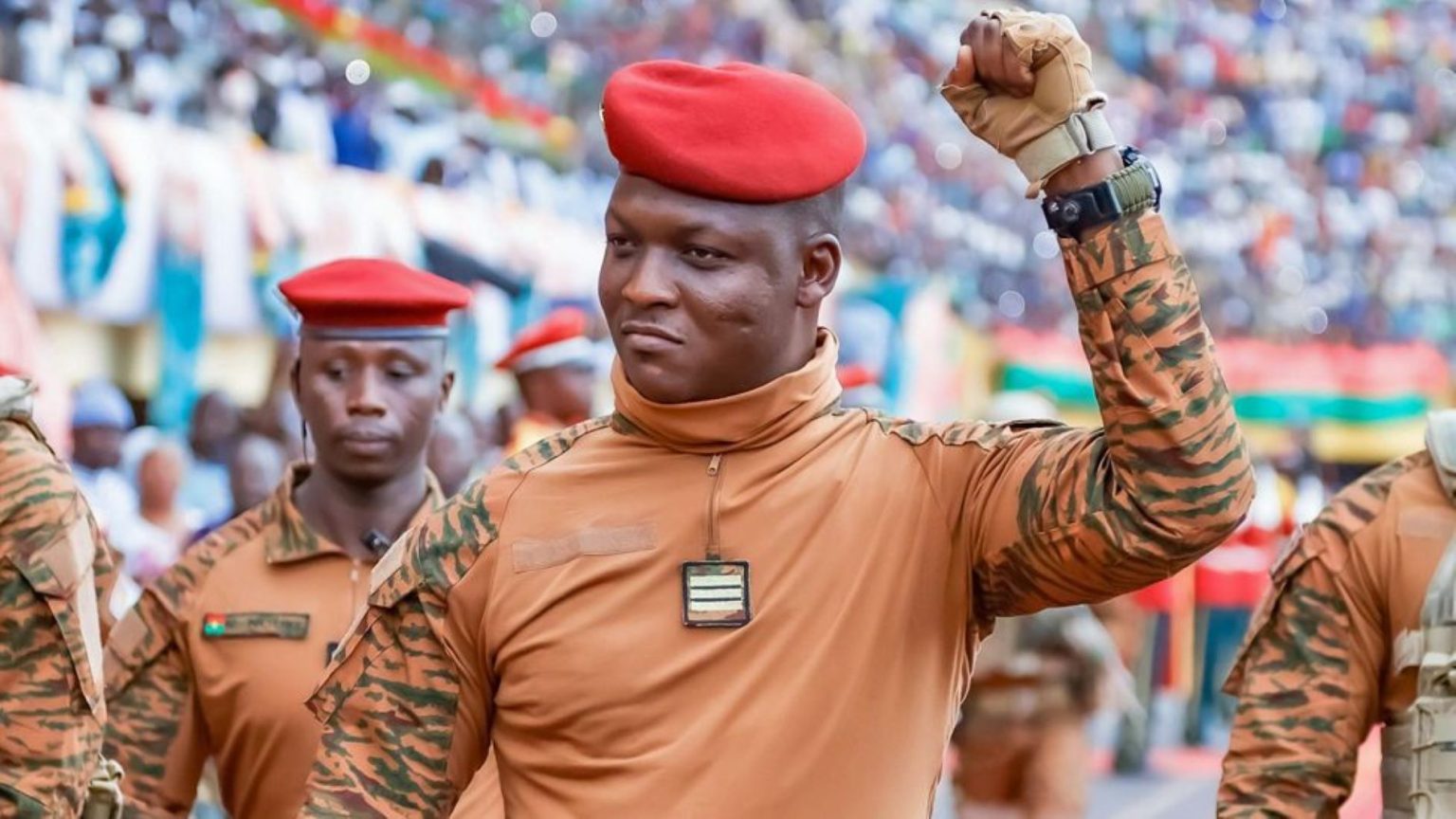
The military leader in charge of Burkina Faso, Ibrahim Traoré, recently admonished African countries to forget about democracy, because the system, he says is another form of slavery and it is bloody.
He said “People must forget about democracy. If an African wants to tell you about democracy, you should run away. Democracy kills. Democracy as a western ideal amounts to slavery, and it is killing. Wherever they want to install it in the world, it’s in the blood. There is no democracy in this world. They impose it when they want and they also kill it. Imperialism is the individual who wants to dominate the other, keep him in slavery and oppress him.”
Whereas, his government and the one he took over from were calculated to be brief and transitory, the country now appears stuck with the military. He just told his people to forget about democracy, until perhaps after 2029. That sends clear signals to countries with wobbly and crooked democratic systems not to let matters degenerate to the level of military incursion. This thing is not cast in stone.
After the successful coup of September 2022, Traoré promised to restore democracy in two years. He had ousted the military regime headed by Lieutenant Paul-Henri Damiba, who acquired power just nine months prior, by toppling President Roch Kabore. When it was two months before the deadline of July 2024, Traoré shifted handover by another five years, till 2029. He banned political parties and told Burkinabes to “forget” about democracy for now.
Before 2022, the democratic environment under Roch Kabore had been manifestly unstable. The government was unable to provide political stability. Kabore postured around finding cogent answers to rampaging terrorist jihadists that had cornered vast territories. The military thought they could get the job done quicker.
Under Traoré, the fight to reclaim nearly 30 per cent of the country from Islamist fighters remains daunting, but he has enough space to consolidate powers and preach patriotism as a political theory and practice. He says that patriotism trounces democracy, urging citizens and young Africans to understand that the concept of western democracy is false. He applies the Libyan experience to explain that when Western countries attempted to foist democracy in that country, the result has been chaos, killings and endless violence.
Traoré is 37 years old. In a continent where approximately 75 to 80 per cent of the population is estimated to be under the age of 37 as of 2026, Traoré, surely has a large audience. It is likely that he has a large chunk of Africa’s population that is amenable to his ways and could be willing to reason along same line and share his ideas.
They love his smart outings, presence and the camaraderie spirit he exudes. We are referring to a population that has not experienced quality democratic governance since the turn of the millennia. They’re vibrant but jobless. They desire a leadership that will harness their energies into productive ventures. But are sadly left to drift across other continents in search of better life. Sometimes, aimlessly and dangerously.
This population also missed out in the pre and post independence transitions, when African nationalism was the driving force for anti-colonial campaigns. They missed out in the brief period of independence, when there was a semblance of political stability and accountable leadership. They were also not present when the first batch of military rulers riddled the continent with martial authority under cover of pan-Africanist revolt against imperialism.
They read the heroics of Muammar Ghaddafi, Murtala Mohammed, Thomas Sankara, and are enthralled, to the point of seeing Captain Traore, General Assimi Goïta of Mali and General Abdourahamane Tchiani of Niger, as reincarnations of that previous era. They’re willing to experiment.
Military rule comes with a lot of restrictions, but it appears many of his people are comfortable with it for now. Apart from banning political parties, more than 100 civil societies in the country have been deregistered due to security concerns.
Even the media has gradually transited into a restricted environment. Critical media are self-censoring to stay out of trouble. The VOA and France 24 are reported suspended.
Yet, Traoré is something of a cult hero and political influencer at home. He is seen as a kind of saviour, connected to the people and appreciated by them. Across the continent and in the diaspora, multitudes showcase him as the new face of African leadership.
They admire his blend of patriotism, radical anti-imperialism, economic self-reliance, defined as “people’s progressive revolution.” He denounces Western democracy, blaming it for the underdevelopment of former colonies. He advances a pan-African model of governance complete with sovereignty, national security and indigenous development. He appears to be winning disciples.
Unfortunately for democracy(ies) in Africa, these younger populations can’t make much sense of what is on offer in many countries. Even scholars and political scientists are debating and theorising how to situate democracies in the continent that are screwed to deliberately frustrate multiparty representation, promote family oligarchies and that are utterly corrupt.
Lovers of democracy and the media have tried to dampen Traore’s rhetoric to prevent a contagion. They’re probably assuming many have not been contaminated. They’re worried that if the story of democracy in Africa is not put in proper perspective, it runs the risk of been de-marketed in the hands of Traoré and his fellow military juntas, who are convinced they’re on the trajectory to redefining leadership in Africa.
They have denounced Traoré’s political discourse as opportunistic and empty. They’re concerned that if not arrested, his campaigns could persuade fledgling democracies to lose hope and abandon the representative model that they said is the best form of government all over the world.
They do not want any intervention that could reverse democratic gains that are in different stages of growth and maturation. They cited thriving examples of Ghana, Cape Verde, Botswana, Ghana, South Africa and Namibia, as models that Africa should look up to, rather than be ensnared in military or other autocratic systems.
The United Nations’ Human Rights Office says it is worried that the political situation in Burkina Faso is deteriorating, particularly on the ban on political parties and restrictions on pro-democracy activists. The world body has demanded that the junta lifts the ban on political activities and avoid further actions that could increase the humanitarian crisis in that country. Over two million citizens are internally displaced and they need assistance.
Beyond those concerns, world bodies, activists and the media should summon courage to warn countries and leaders that flagrantly renege on social contracts that are signed with the people when democracy is touted. They must not wait for matters to degenerate before they call erring politicians to order. That’s one area they’re not good at, but are quick to condemn military interventions.
In Zimbabwe, it is reported that the ruling Zanu-PF is considering a constitutional amendment designed to give the parliament the right to elect the president, rather than voters, and to extend his term in office from five years to seven. The Zimbabwean opposition is disturbed that the ruling party that has been in power since independence in 1980 is bent on undermining multi-party democracy in the country.
A veteran opposition leader was reported by the BBC to say, “This is a coup, a slow coup that is unfolding in Zimbabwe.” But a ruling party official, Patrick Chinamasa, vehemently said: “There’s nothing that stops us to change, to go to another system that’s less costly, less controversial.”
Democracies in Africa are using what appears to be constitutional means to stifle opposition and remain in power for decades. In Cameroon, the world’s oldest president, Paul Biya just appointed his son, Frank Emmanuel Biya, to man the country’s most powerful positions in a presidential decree signed on April 4. Emmanuel Biya is vice president, head of the Armed Forces and is Minister Delegate at the Presidency in charge of Defence. In Uganda, President Yoweri Museveni’s son, Gen. Muhoozi Kainerugba, is the Chief of Defence Forces, to consolidate executive and military powers within the Museveni family.
Last week in Abuja, an opposition party, African Democratic Congress (ADC), was denied the Eagle Square and Abiola Stadium, as venue to hold its national convention. There was evidence that the party applied for a venue, but the Minister in charge of the Federal Capital Territory, Nyesom Wike, denied knowledge of any application. Instead, he said ADC was looking for cheap publicity.
The ADC was forced to squeeze inside a private event centre that apparently was not primed to host about 3,000 delegates. And the All Progressives Congress (APC), and their government expressed no iota of shame about their crooked politics, knowing that officials of the UK Foreign, Commonwealth and Development Office, attended the ADC national convention, and were firsthand witnesses to APC’s arrogance and lawlessness.
We’re seeing situations where the opposition is harassed and intimidated. Nigeria has slid into an era where party primaries are now replaced by coronation ceremonies, where the president through a conclave of advisory council composed of hand-picked elders, now decide who should be the governorship candidate in an election where the opposition had been decimated beforehand.
It is clear as daylight, that whoever emerges through this process cannot claim popular mandate. This is an abridged form of democracy that will eventually deny the people their voting right. This is typically Lagos, and is being exported to Southwest.
In The Gambia, Adama Barrow promised in 2016 to serve only three years in a coalition transitional government managed by leaders of the Economic Community of West African States (ECOWAS), in the bid to get rid of Yahaya Jammeh’s 22-year despotic rule. Despite protests, Barrow insisted on staying for five years. He then got elected for another term of five years in 2021. He is now seeking a third term, claiming that leadership is Allah-ordained, citing the 30-year rule of the first president of Gambia, Dauda Jawara.
While we vilify Traoré and his gang, let’s say something about those who make peaceful change impossible.
In this article