
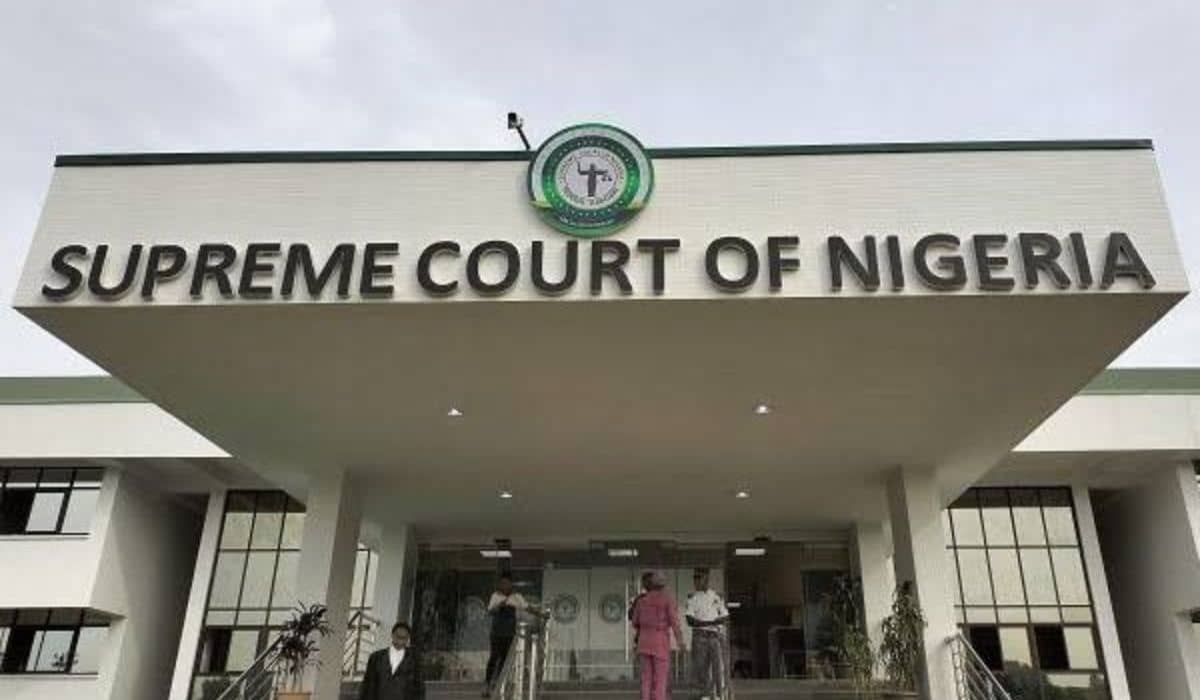
The Supreme Court on Friday overturned a Court of Appeal decision that had disqualified Senior Advocates of Nigeria (SANs) Wole Olanipekun and Muiz Banire from representing Neconde Energy Limited and Nestoil Limited in a $2 billion debt dispute.
In a unanimous judgment delivered by Justice Mohammed Baba Idris, the apex court ruled that the companies retain the right to choose their own legal representatives, especially in cases challenging the validity of a receivership.
The Court stressed that where the appointment of a receiver is under legal challenge, such a receiver cannot also claim the authority to appoint lawyers for the company involved in the same case. According to the justices, doing so would create a clear conflict of interest.
The dispute centered on whether a receiver appointed by lenders could exclusively control the legal representation of a company, even while the legality of that receivership was still being contested in court. The Supreme Court answered firmly in the negative.
Justice Idris explained that the core issues before the trial court included whether lenders had the right to enforce security, appoint a receiver, and whether such a receiver could lawfully exercise powers derived from that appointment. He noted that these questions go to the very foundation of the receivership itself.
The court held that it would be inappropriate for a receiver, appointed by parties whose actions are being challenged, to determine how the company defends itself in court.
It further ruled that Section 556(3) of the Companies and Allied Matters Act does not extend a receiver’s powers to cases where the validity of the receivership is being questioned. In such situations, companies retain their residual rights to defend themselves through their directors and chosen counsel.
“The defence of the action through its directors and the counsel retained by them cannot be said to be incompetent merely because a receiver has been appointed,” Justice Idris stated.
The Supreme Court therefore set aside the January 13, 2026 judgment of the Court of Appeal, which had earlier removed the lawyers and granted sole authority over legal representation to the receiver.
The case, SC/CV/48/2026, arose from an alleged $2 billion debt owed by Neconde Energy Limited and Nestoil Limited to a consortium of lenders led by FBNQuest Merchant Bank and FBN Trustees Limited. Following the default, a receiver was appointed to manage the companies’ assets.
By affirming the companies’ right to independent legal representation in receivership disputes, the Supreme Court has reinforced key principles of corporate governance and creditor enforcement. Legal analysts believe the ruling will influence future insolvency and receivership cases in Nigeria.
In this article