
By Folorunso S. Aluko
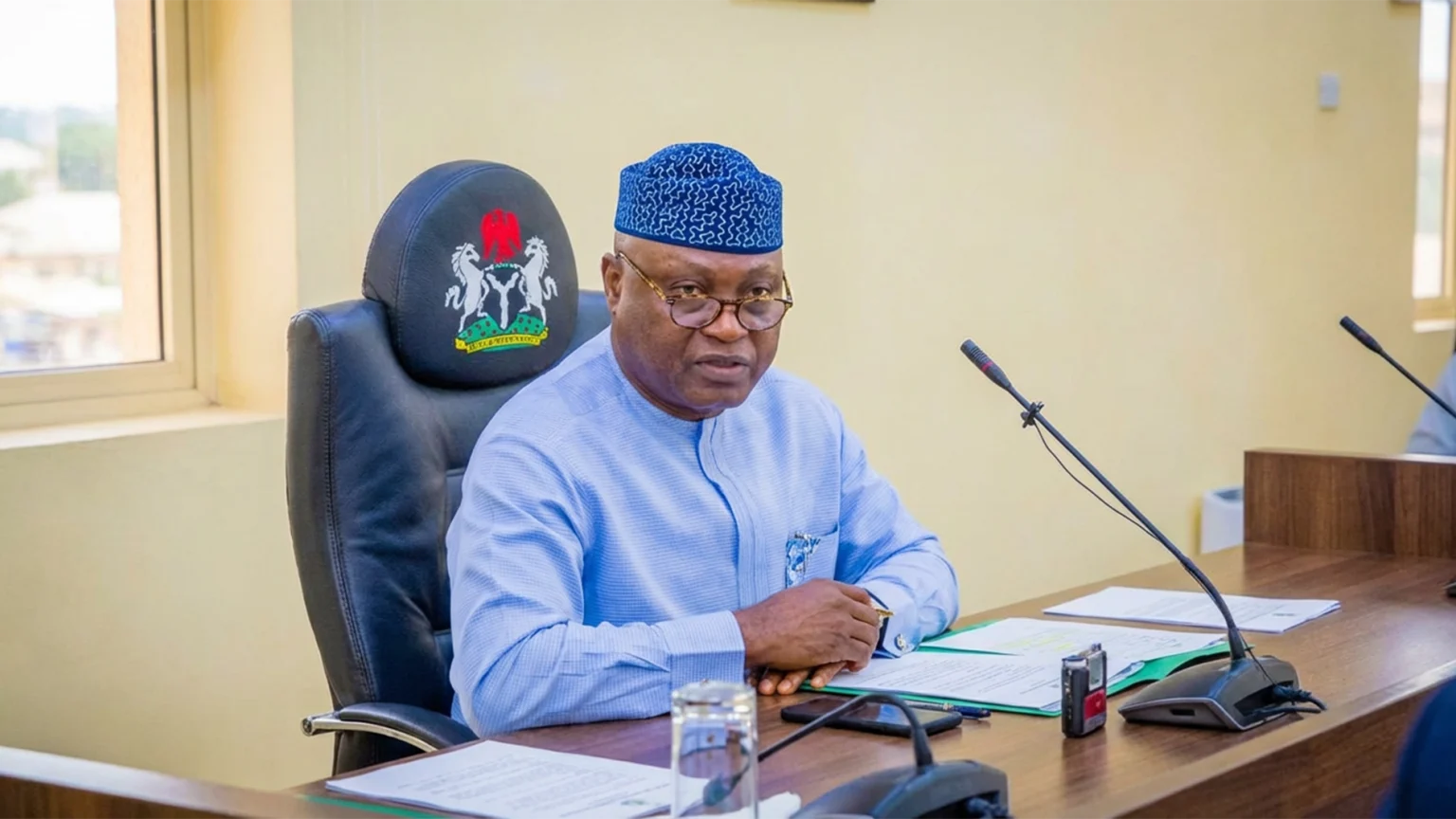
The decisions taken at the Second Meeting of the Ekiti State Executive Council on Wednesday, 11 March 2026, were more than a routine catalogue of approvals.
They amounted to a coherent statement of direction: a government deliberately matching policy with purpose, institutions with reform, and expenditure with measurable impact.
Across governance, statistics, education, sports, agriculture, power, public procurement and urban renewal, the Council’s resolutions showed an administration determined to translate vision into visible development.
That broader vision is not in doubt. Governor Biodun Abayomi Oyebanji’s administration has consistently framed its work around a shared prosperity agenda and a six-pillar development architecture that includes Youth Development and Job Creation, Human Capital Development, Agriculture and Rural Development, Infrastructure and Industrialisation, Arts, Culture and Tourism, and Governance. The 2026 state budget itself was signed as a “Budget of Sustainable Governance,” with emphasis on completing ongoing projects, food security, wealth creation and infrastructure.
What emerged from this Council meeting, therefore, was not a scatter of isolated approvals. It was a disciplined governing philosophy at work. Governance and Institutional Reform: Building the State from Its Foundations
One of the most consequential decisions of Council was the approval for the establishment of the Office of the Surveyor-General of Ekiti State. At first glance, it may appear administrative; in reality, it is profoundly developmental. Serious states are built on strong institutions, and land administration is one of the most critical foundations of orderly growth, investment security, urban planning and rural expansion.
By approving legislation to formally establish the Office, provide for the appointment of a qualified Surveyor-General, and regulate surveying activities in line with professional standards, the Oyebanji administration has moved to close an institutional gap in the management of land resources. In a period when land use, urban expansion and investment mapping are becoming increasingly central to subnational development, this reform signals seriousness. It shows a Governor who understands that development is not sustained by projects alone, but by the invisible architecture of law, records, standards and accountability.
The decision also reflects due process. Council did not simply announce a structure; it approved a legal pathway, a professional framework, and a remuneration structure tied to public service parity. That is reform with order, not improvisation.
Data, Planning and the Intelligence of Government
If the Office of the Surveyor-General strengthens the geography of governance, the approval of the Ekiti State Statistical Master Plan (2025–2029) strengthens its intelligence.
This was one of the most forward-looking decisions taken by Council. Evidence-based governance is the hallmark of modern public administration, and Ekiti has now reaffirmed its intention to govern by facts, measurement and long-term planning. The new five-year Statistical Master Plan is designed to improve the quality, reliability and availability of official statistics, deepen collaboration among MDAs, identify users’ data needs, attract and retain skilled personnel, and build durable systems for implementation, monitoring and financing.
There is something especially commendable about this approval. It is easy for governments to celebrate roads, buildings and physical assets; it is rarer to see leadership invest in the systems that make policy smarter. Yet without credible data, no government can properly target social intervention, plan infrastructure, evaluate school outcomes, monitor agricultural performance, or measure value for money. In approving this Master Plan, the Governor has demonstrated that he is not merely interested in action, but in informed action.
This is also where Ekiti’s direction aligns with wider national reform thinking. Federal policy under President Bola Ahmed Tinubu has increasingly stressed discipline in public finance, digitisation, data-driven performance and measurable delivery, while the Renewed Hope framework places major emphasis on infrastructure, education, agriculture, energy and institutional efficiency. The broader APC reform orientation likewise emphasises transparency, productivity, human capital and development grounded in implementation rather than rhetoric.
Education, Inclusion and the Moral Purpose of Government
Some of the most moving approvals from the Council meeting were in the education sector, especially those touching vulnerable learners and school safety.
The rehabilitation of drainage and walkways at Government Special School, Ido-Ekiti, and Government Special School for the Deaf, Ikoro-Ekiti, is more than an engineering intervention. It is a statement of humane governance. With approvals of N85,734,929.19 and N88,945,400.00 respectively, Council responded to erosion damage that had compromised drainage channels, walkways, driveways, school frontage and the general learning environment. In schools serving pupils with special educational needs, such defects are not minor inconveniences; they are barriers to dignity, safety, access and learning.
By approving urgent intervention through direct labour, with a 16-week timeline, the administration showed empathy joined with urgency. This is leadership that listens, inspects, and acts.
That same spirit was evident in the approval of N690,563,845.45 for the renovation of affected public secondary schools and security enhancements, including the critical perimeter fencing of All Souls’ Grammar School, Ado-Ekiti. From Mary Hill High School to St Thomas Secondary School, Itaji Grammar School, Ilupeju High School, Notre Dame Grammar School, Community High School Erijinyan-Ekiti and St Michael Secondary School, Ifaki-Ekiti, the message is unmistakable: schools must not be abandoned to storm damage, insecurity or decay.
This attention to education fits squarely within both Governor Oyebanji’s human capital philosophy and the national direction of the Renewed Hope Agenda, which places education at the centre of renewal, productivity and social transformation.
Public Administration, State Presence and Procurement Modernisation
Three other approvals underscored the administration’s determination to make government work better.
The first was the renovation of the Ekiti State Liaison Office Complex at 35B, Suez Crescent, Abacha Estate, Wuse Zone 4, Abuja, awarded to Clemcharles Nigeria Limited for N57,920,341.94 with a three-month completion period. State liaison offices are often dismissed as symbolic outposts, but they are important operational assets. They represent the state in the Federal Capital, host official engagements, and project institutional seriousness. Restoring that complex is, in effect, restoring the face of Ekiti in Abuja.
The second was the approval of N443,459,756.25 for the construction of a modern e-Office Space and Conference Hall for the Bureau of Public Procurement. This is a particularly strategic investment. Procurement is where governance either earns public trust or loses it. By providing the Bureau of Public Procurement with modern infrastructure, digital workspaces and a functional conference facility, the administration is strengthening the engine room of transparency, compliance and efficiency across MDAs.
The third, and perhaps most significant in symbolism, is the style of decision-making itself. Timelines were stated. Contractors were named. direct procurement or direct labour was justified where urgency demanded it. Bills of Quantities were prepared after professional inspection. Legislative processing was invoked where necessary. These are not accidental details; they are signs of a government that wants its decisions to stand on procedure as well as purpose.
Sports Infrastructure and the Ambition to Compete
Ekiti’s sports renaissance also received a major boost through the approval of additional works on the reconstruction and remodelling of the Oluyemi Kayode Stadium, Ado-Ekiti.
Originally awarded in March 2025 at N1,618,511,325.83 and now reported at 74 per cent completion, the project has progressed substantially. Yet rather than settle for a partial upgrade, Council approved an additional N1,056,326,627.52 for new and expanded facilities including an additional administrative building, 1,500 extra spectators’ seats, a 250-capacity hostel, canopy extension, multipurpose courts, more stadium lights, VIP toilets and soccer pitch extension. The new total rises to N2,679,911,110.51.
This is the language of ambition. The administration is not merely rehabilitating a stadium; it is building a sports asset capable of meeting National Football League standards and elevating the experience of athletes, officials and supporters alike. In a state famed for intellect and culture, this is an important reminder that physical infrastructure for youth engagement, talent development and social energy also matters.
Power, Productivity and the Economics of Growth
No development agenda can advance very far without power. Council’s approval for the renewal of the Bank Guarantee for the 3MW Ekiti Independent Power Plant in the sum of N5,711,196,385.48 is therefore one of the most economically strategic decisions taken at the meeting.
By sustaining the guarantee structure for the third operational year of the plant, the government has signalled continuity, seriousness and commitment to energy security. It is precisely this kind of long-range support that gives confidence to infrastructure financing and keeps strategic projects from stalling between conception and maturity.
The significance is broader than electricity supply alone. Reliable power supports industrial activity, service delivery, enterprise growth and investor confidence. It also mirrors national priorities under the Renewed Hope Agenda, which links transport and energy infrastructure to productivity, jobs, market access and improved living standards.
Agriculture and Rural Renewal: Reviving Productive Assets
In approving N136,243,816.22 for the construction of three buildings at Gede Farm Settlement, the Executive Council again demonstrated that agriculture in Ekiti is not treated as a slogan, but as a living pillar of development.
The decision to reconstruct three of the twenty abandoned and dilapidated buildings within the settlement is both practical and symbolic. Practical, because agriculture requires support structures, habitation, logistics and working facilities. Symbolic, because it represents the rehabilitation of neglected public assets into productive infrastructure.
The project, to be executed through direct labour within six months, aligns with the Governor’s agriculture and rural development pillar and with national thinking that places food security, agro-value chains and resilient rural productivity at the heart of economic stability.
Roads, Mobility and the Urban Economy of Ado-Ekiti
Perhaps the most visible approval of the meeting was the N6,290,549,973.44 earmarked for the rehabilitation of key township roads in Ado-Ekiti.
The spread is impressive: New Iyin–NTA Road; Onigari–Spotless Hotel–Egbewa Road; Ijigbo–Baptist High School Road; Okesa–Oke Ori Omi–Irona Road; Oke Iyinmi–Fajuyi–Police Headquarters Road; Ecobank–Mobil Filling Station, Ajilosun Road; and Ile Abiye–Bisi Egbeyemi Crescent–Government House Gate Road. These are not decorative interventions. They are mobility corridors that shape commuting patterns, market access, security movement, business convenience and daily urban life.
By awarding the contract to Messrs. Delko Holdings Nigeria Limited, with a 12-month completion period, the administration has again demonstrated its preference for execution over fanfare. Roads are where governance becomes tangible. When traffic eases, businesses move faster, transport costs soften, and access improves, citizens feel government not as a speech, but as a daily improvement in quality of life.
A Council Meeting that Read Like a Development Charter
Taken together, the approvals from this single Executive Council meeting covered more than N8.85 billion in direct project commitments, alongside a further N5.71 billion bank guarantee renewal for the Independent Power Plant. Yet the deeper significance lies not merely in the figures, but in the pattern.
This was a meeting that touched land governance, statistical reform, special-needs education, school safety, procurement modernisation, state representation, sports development, energy continuity, agricultural revitalisation and urban roads. That breadth reveals a Governor who is governing across sectors, not in silos; a leadership style that respects process, values institutions, and pursues delivery with deliberateness.
In Governor Biodun Abayomi Oyebanji, Ekiti appears to have a leader intent on proving that reform can be orderly, compassionate and results-driven at the same time. His Council’s decisions reflect a government that is not distracted by the noise of politics, but anchored in the discipline of administration. They also resonate strongly with President Bola Ahmed Tinubu’s Renewed Hope Agenda and the APC manifesto tradition: build infrastructure, strengthen institutions, invest in people, modernise governance, expand opportunity and deliver growth that can be felt in homes, schools, farms, roads and workplaces.
The road ahead will, of course, be measured by implementation. But that is precisely where this administration seems most eager to be judged. And if the tone and texture of this Council meeting are any indication, Ekiti is not merely planning for progress; it is organising itself, sector by sector, to deliver it.
*Folorunso S. Aluko, Psephologist and Leadership Expert, writes from Oye-Ekiti
In this article