
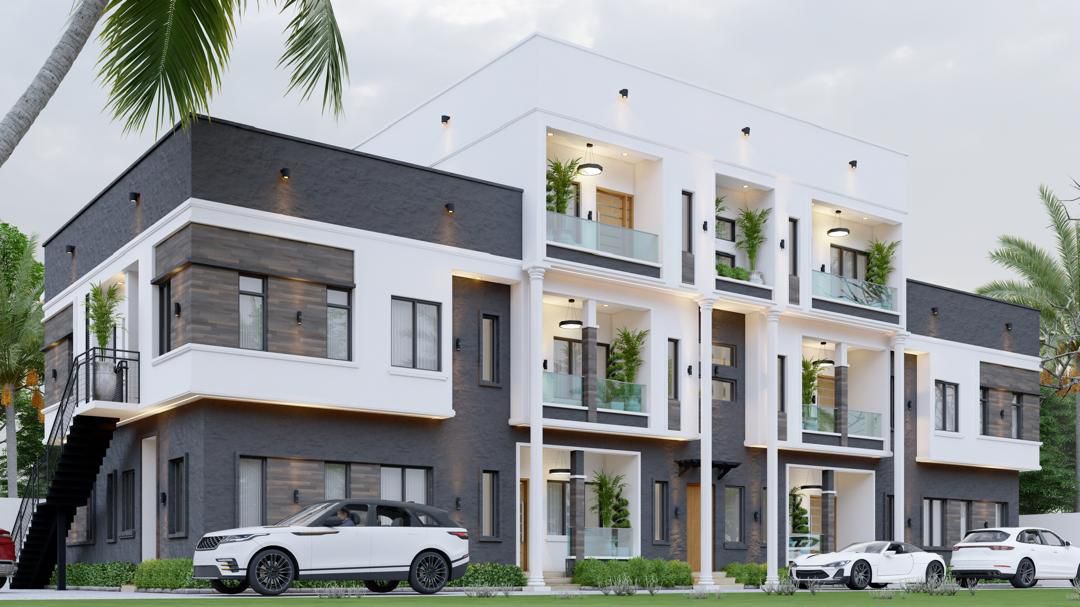
Housing experts have called for structural reforms in Nigeria’s mortgage sector to improve access to home ownership for low-income earners and stimulate growth in the real estate industry.
Chief Executive Officer of UPDC Plc, Odunayo Ojo, made the call during a real estate roundtable webinar titled “Real Estate Outlook 2026: Market Reality Versus Expectation,” organised by Bamigbola Consulting in Lagos.
Ojo said the mortgage system must be anchored on three key pillars: affordable interest rates, reduced construction costs, and improved income levels to become effective and inclusive. “To have a vibrant mortgage industry, you need three things. First is a demand-side enabler, access to loans at single-digit interest rates with long tenures of 20 years and above. That is what the Ministry of Finance Incorporated Real Estate Investment Fund (MREIF) aims to address,” he said.
He noted that such financing models are common in developed economies and should be replicated locally to expand home ownership. According to him, the second critical factor is the supply side, which includes reducing the high cost of construction, infrastructure, and land access. The third, he added, is improving the income levels of Nigerians, which currently limits their ability to access mortgage financing.
“If people’s incomes remain low and construction costs high, only high-income earners will continue to benefit from schemes like MREIF, using them largely for investment purposes rather than meeting housing needs,” he said.
Ojo observed that the real estate sector has emerged as one of the top contributors to Nigeria’s Gross Domestic Product (GDP), reflecting its growing importance in the economy.
He described the sector as a major driver of employment and economic activity due to its wide-ranging value chain.
He, however, noted that the capital-intensive nature of real estate development continues to limit participation by individuals, despite the availability of intervention funds such as the Family Homes Fund, MREIF, and the National Housing Fund (NHF).
“When people talk about real estate, they often focus only on housing, especially affordable housing, because of high demand. But there are other segments such as logistics, healthcare facilities, commercial and retail real estate, where significant returns are being generated,” he said.
Ojo emphasised that while housing remains a critical human need, professionals should broaden their focus to include other viable segments of the industry. He added that real estate remains a key store of value and a major asset class globally.
On rising construction and property acquisition costs, Ojo linked the trend to macroeconomic factors, including currency depreciation and inflation. “Whatever happens to the naira affects the cost of real estate. Inflation has driven up construction costs significantly, although there are signs of moderation. Real estate investment, however, still provides some protection against economic volatility,” he said.
He urged the government to introduce tax rebates and other incentives for investors in the social housing segment, noting that targeted incentives could significantly boost investment and supply.
Also speaking, Senior Partner at Bamigbola Consulting, Dotun Bamigbola, said the real estate sector is already making notable contributions to Nigeria’s economy, accounting for over five per cent of GDP. He noted that property values have surged sharply in recent years, with increases estimated between 100 and 150 per cent across major cities and emerging urban centres, significantly affecting affordability.
“Properties that sold for about N100 million a few years ago now go for between N150 million and N200 million. This creates a major affordability challenge for many Nigerians, especially when disposable incomes remain low,” he said.
Bamigbola acknowledged recent interventions by the Federal Government, including the establishment of the MREIF, which has facilitated mortgage loans at single-digit interest rates.
“As of last year, about 1,000 loans had been processed at a maximum of N100 million and an interest rate of 9.75 per cent. This is a positive step, but the question is how far it can go in addressing the broader housing gap,” he said.
He pointed out that Nigeria still faces an estimated housing deficit of about 15 million units, citing data from the Federal Ministry of Housing and Urban Development and the National Bureau of Statistics.
Bamigbola stressed the need for stronger government incentives to encourage private sector investment in low-income housing, noting that addressing the cost of development and improving access to finance are critical to reducing the housing deficit.
In this article