
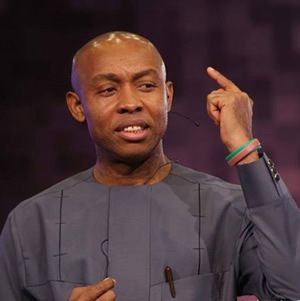
By Chidi Anselm Odinkalu
As Africa approached the turn of the Millennium, the leaders of the continent were well on the way to reaching a consensus that “democracy, good governance, respect for human and peoples’ rights and the rule of law are prerequisites for the security, stability and development of the Continent.”
To many, this meant the conduct of elections. Indeed, two decades later, the African Court on Human and Peoples’ Rights would affirm that the only legitimate basis for the exercise of political power on the continent is “regular conduct of free and transparent elections … through universal suffrage.”
Around the same time, the leadership of the continent in the Organisation of African Unity (OAU) was grappling with the meaning of “free and transparent elections.” Senior ambassadors of the OAU reached a decision recommending to the organization to outlaw “manipulation of the Constitution aimed at preventing a democratic change of government” or “any form of election rigging and electoral malpractice, duly established by the OAU or ascertained by an independent and credible body established for that purpose.”
One decade earlier, in 1989, the OAU deployed to observe the referendum on the independence of Namibia, marking the first that the continental organization would observe an election in Africa. Until then since its creation in 1963, the OAU did not much concern itself with the business of how governments came to power anywhere in the continent. In the first decade of its involvement in election observation, the OAU did not see an election that it did not agree with.
This was a source of comfort for rulers all over the continent. In Nigeria, for instance, Sani Abacha, the four-star general who ruled Nigeria from November 1993, did not have anything against the idea of an election as long as it did not lead anyone into the misapprehension of a contest.
By June 1998, General Abacha was on the cusp of transitioning the country into elective governance. In the election that would have been overseen by him, there were five recognized parties. These were: the Democratic Party of Nigeria (DPN); United Nigeria Congress Party (UNCP); National Centre Party of Nigeria (NCPN); Grassroots Democratic Movement (GDM); and the Congress for National Consensus, (CNC). All five parties shared one presidential candidate in General Sani Abacha.
The death of General Abacha in June 1998 sadly frustrated that plan but opened up a playbook in election management that had, until now, not been seriously revisited in Nigeria.
By the time the All Progressives Congress (APC) came to power in Nigeria in 2015, the African Union (AU), successor to the OAU, had logged about 500 election observer missions around the continent. Over that period, the OAU/AU still did not see an election that it did not approve of.
The AU did, however, evolve some underlying principles to govern elections, which were eventually embodied in a continental charter on democracy, elections and governance. These require the existence of independent election management bodies to manage the elections, such as Nigeria’s Independent National Electoral Commission, INEC. They also require respect for “political pluralism and tolerance”, another way of saying that elections should not exclude competitive candidates.
The African Union usually deploys observer missions to these elections. Where there are disputes, the AU also requires an independent judiciary to resolve them.
This is usually done by way of election litigation. Cases around elections can occur before or after the vote. Historically in Nigeria, this distinction is very important. Regular courts oversee pre-election litigation but only election petition tribunals can adjudicate on disputes over the outcome of an election.
Until 2007, that distinction appeared well settled.
However, following the 2007 cycle of elections, the Supreme Court awarded the governorship election in Rivers State to Rotimi Amaechi who was not even on the ballot in the vote. He had been manipulated out of the party primaries in an act of party political impunity. In response, the Supreme Court hijacked the election outcome on his behalf by judicial fiat in a case that had in fact originated as a pre-election dispute.
That case raised the significance of pre-election disputes in Nigeria and consolidated the transfer of the right to vote in Nigeria from citizens to the judges. By 2019, the Supreme Court awarded the Governorship election in Zamfara State to a well-beaten candidate after disqualifying the winner in a pre-election dispute and precluding his party from the contest by refusing to order a re-run.
Under colour of law, African governments have increasingly used the courts to re-make elections as largely free of contest. Six months ago, for instance, the president of Côte d’Ivoire, Alassane Ouattara, used the courts to ban all competitive candidates from the presidential election. When the result was announced, the election management body awarded him some 90% of the votes.
This past week, retired President of the Court of Appeal, 82 year-old Isa Ayo Salami, floated the idea of such un-contested elections for Nigeria in remarks that simultaneously disparaged his former colleagues in the judiciary while also querying why they sanctioned the candidacy of Peter Obi of the Labour Party in the 2023 general elections.
It is worth recalling that in 2011, a committee of the National Judicial Council chaired by former President of the Court of Appeal, Umaru Abdullahi, considered a consolidated set of petitions concerning the conduct of Isa Ayo Salami in the Sokoto State governorship election in 2007. One of the complaints included “call logs that throughout the month of September up to October 2010 when the judges wrote and delivered the judgment in Ekiti,…. Justice Salami,…. and the person he claimed to be Justice Salami’s said agent….were in close telephone contact by voice or SMS with the counsel to [Action Congress] candidate and official of the party.” The Committee in the end did not have to make a finding on this but the allegations of close affinity between the former judge and the party that is now the All Progressives Congress (APC) are not new.
Isa Ayo Salami has floated a kite which could consummate an Abacha-style election under a ruse of law. The Electoral Act 2026 creates ample room for such mischief. Among other things, the Act, which became law on 19 February, requires all parties to maintain “a digital register of its members containing the name, sex, date of birth, address, State, Local Government, ward, polling unit, National Identification Number and photograph in both hard and soft copies.”
The logic of keeping this register in hard copy defies understanding. The staggering cost and logistics – not to mention waste – of doing so should not detain us at the moment. The Act goes further: the parties must submit the register (presumably both hard and soft copies) to the INEC at least 21 days before party primaries, which must occur between 23 April and the end of May. In effect, the parties, which have until now not been required to have digital registers, must create them in less than two working months. The cost of failure to do this is will be disqualification of their candidate(s) from the contest.
In 1979, the Federal Electoral Commission tried to disqualify Nnamdi Azikiwe of the Nigeria Peoples Party (NPP) and Aminu Kano of the Peoples’ Redemption party (PRP) from the presidential elections. The courts saved them.
Nigeria’s judiciary has evolved and not necessarily for the better in the intervening period. There is ample room for pre-election judicial mischief in the 2026 Electoral Act, which the courts could easily use to preclude competitive candidates from the contest.
It will be surprising if this is not deployed to block competitive candidates from the presidential election in January 2027. The irony is that the president whose claim to fame is his advocacy against military rule, could be the person who eventually appropriates the methods of Nigeria’s maximum military ruler to make himself the only competitive candidate in an un-contested election in 2027.
A lawyer and a teacher, Odinkalu can be reached at chidi.odinkalu@tufts.edu
In this article