
By Isaac Chibuife
With the Middle East crisis feeding into the entire global economy through pressure on energy cost and testing the cooling global inflation, ISAAC CHIBUIFE, VICTORIA NWACHUKWU and ABIGAIL IKHAGHU write that every struggling Nigerian is a ‘casualty’.
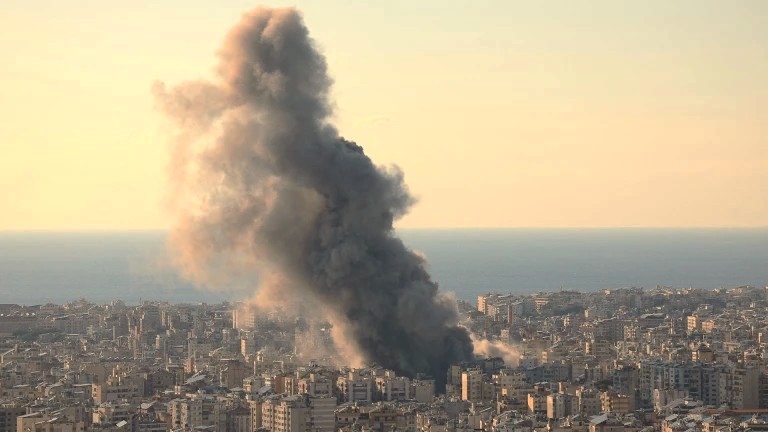
Nigeria’s fragile economy is once again being tested by forces far beyond its borders as the escalating conflict involving the United States, Israel and Iran reverberates across global oil markets, trade routes and supply chains.
For a country heavily dependent on crude oil exports but deeply vulnerable to imported inflation, the crisis presents a paradox: higher oil prices could boost government revenue and foreign exchange earnings. Yet, the same development could intensify inflation, worsen the cost-of-living crisis and squeeze businesses already grappling with weak consumer demand.
Crude oil prices have surged past $100 per barrel, fuel pump prices have risen sharply, transport fares have spiked, food prices are above N1,200 per litre and small and medium enterprises (SMEs) already gasping for air are now bracing for even harder times.
Economic analysts say the war, which has unsettled the global energy market and disrupted shipping routes in the Middle East, could deepen existing structural weaknesses in Nigeria’s economy if policymakers fail to respond strategically.
The Executive Chairman of the Society for Analytical Economics, Nigeria, Prof. Godwin Owoh, said wars historically produce severe economic consequences, most of which are negative for countries that are not directly involved but are linked through global markets.
“Usually, anywhere in the world, war, in most cases, will come with very serious economic consequences, consequences that are usually negative,” Owoh said.
Yet, according to him, the situation is not entirely bleak for oil-producing nations like Nigeria.
Owoh noted that disruptions to shipping and attacks on oil infrastructure in the region have pushed crude prices sharply upward.
While a rise in PMS prices will directly lead to an increase in the prices of food, goods, services, and transportation fares, which will further pile pressure on household income, the government is smiling as more revenue will flow into the federation account.
With the flow of more petrodollars, analysts believe the government must remain prudent and resist the temptation of living large, especially state governments.
The windfall, they noted, should be directed at building infrastructure as well as payment of Nigeria’s debts.
“The price of oil has moved from about $80 to over $100 per barrel. Oil-producing countries are having almost double the windfall,” he said.
He argues that even if the war were to end tomorrow, the damage to oil infrastructure around the Strait of Hormuz and the Iranian island through which 90 per cent of Iran’s oil exports pass means the elevated prices would likely persist to the end of the year.
In theory, higher oil prices should strengthen Nigeria’s fiscal position by increasing foreign exchange inflows, boosting reserves and supporting the value of the naira.
According to Owoh, if properly managed, the windfall could even improve Nigeria’s macroeconomic stability.
“From now on to December, we are sure that a lot of money will come to Nigeria arising from this increase in oil prices. Enhanced dollar flow means the naira should be strengthening,” he revealed.
However, economists warn that the country’s record suggests it may struggle to fully reap the benefits of the windfall.
He contrasts Nigeria’s performance with that of Angola and Ghana — countries that, despite their own challenges, are managing the oil price spike more effectively. “If you watch other oil-producing countries, the pump price is not increasing as it’s increasing in Nigeria,” he observed.
The reason, in his view, is simple: “There’s no control in our economy. There’s no discipline. Fiscal discipline is lacking.”
Also speaking, Vice Chairman of Highcap Securities, David Adonri, said rising crude prices could boost Nigeria’s external revenue and strengthen its foreign reserves.
But he warned that the benefits may not translate into relief for households or businesses.
“Rising crude oil price is expected to boost Nigeria’s external revenue and positively impact the trading accounts of upstream petroleum companies. However, on the flip side, it will make domestic inflation spike because the government is not passing the benefit of higher crude oil revenue to subsidise domestic consumption,” he said.
Adonri added that as a result of past market reforms, Nigerian consumers are now absorbing the full impact of higher import costs.
“The imported inflation via rising cost of all imports will be absorbed by consumers,” he noted.
Ripple effect of rising fuel costs
Already, the impact is being felt on the streets. Across Lagos and other major cities, transport fares have surged as petrol prices rise, forcing commuters to spend more of their daily income on transportation.
Journeys that previously cost N500 on some routes now cost about N800, while fares from Jakande Gate, Isolo, to CMS have risen to around N1,700 from about N1,400. On the Jakande Gate to Oshodi route, fares have jumped from N400 to N700, while travellers between Ikeja and Egbeda are now paying close to N800, up from N500.
For commuters like Bolaji Davidson, a civil servant who travels daily from the Ajah axis to Victoria Island, the increase has disrupted household budgets.
“When transport keeps increasing like this, it affects everything. Before, I could plan my feeding and other expenses after removing transport money, but now it is becoming difficult,” he said.
Transport operators insist the increases are unavoidable. A bus driver at Oshodi said drivers had been forced to meet with park officials before agreeing to a new fare structure. “When petrol goes up, we have no option. The money we make from trips must still cover fuel and other expenses,” he said.
But the consequences extend far beyond commuting.
Transport operators and traders say the increase in logistics costs is already pushing up food prices across local markets.
At several markets in Lagos, staple commodities such as tomatoes, groundnuts, bread and soft drinks have recorded price increases within days.
A paint bucket of tomatoes that sold for about N4,200 last week now goes for around N5,000. Raw groundnuts have jumped from about N6,000 to N7,000 per paint bucket. Eggs, described by traders as one of the most affected items, have become increasingly scarce, with crates now selling for N6,000 and above, while the eggs available are noticeably smaller.
“Before, customers would ask how many crates they wanted. Now we count and share because supply is limited,” a market trader said. Sourcing eggs has also become more difficult, with sellers sometimes travelling across multiple locations before finding stock. “Sometimes you move around and spend money on transport before you even find eggs to buy,” the trader added.
Cooked food vendors have responded with a strategy that speaks to the desperation of the times: rather than raise prices outright, many now serve smaller portions to keep their meals within customers’ reach. “We cannot increase the price too much because people may stop buying. What we do now is reduce the quantity a little so we can still sell,” one food seller explained.
For small businesses that depend on generators to cope with Nigeria’s chronic electricity shortages — restaurants, barbers, cold-room operators- the crisis is even more acute. Higher fuel costs are driving up daily operating expenses, and some business owners say they may eventually be forced to raise the price of their services.
Economists say this pattern reflects the broader inflationary pressure created by rising fuel costs.
Inflation and hardship are likely to intensify
Emeritus professor of economics and public policy at the University of Uyo, Prof. Akpan Ekpo, said the increase in fuel prices could trigger inflation across virtually every sector of the economy.
“Once the pump price goes up, it will affect virtually every sector of the economy,” Ekpo said. “Transport costs will go up, agricultural costs will go up, and you are going to have inflation.”
He warned that the Middle East crisis could intensify the hardship already experienced by Nigerians.
“You know already that there is hardship, so the hardship will intensify,” he said.
According to Ekpo, rising energy costs will push up food prices and disrupt supply chains, forcing households to spend an even larger share of their income on basic needs.
He noted that many Nigerians are already spending far more than the recommended share of income on food.
“According to economic law, you shouldn’t spend more than 10 per cent of your income on food. But now people are spending even more than 60 per cent,” he said.
To cushion the impact, Ekpo urged the government to temporarily reintroduce targeted subsidies for vulnerable groups and consider importing food to stabilise prices.
SMEs face a new wave of pressure
Small and medium enterprises (SMEs), widely regarded as the backbone of Nigeria’s economy, are also likely to bear the brunt of the crisis.
Businesses that depend heavily on fuel-powered generators, transportation of goods and imported inputs are particularly vulnerable.
According to Adonri, rising energy costs will increase production and distribution expenses, squeezing corporate profits.
“High energy costs will increase the cost of production, transportation and distribution. This will depress the profit and loss account of enterprises if they are unable to pass the rising cost to consumers,” he said.
Ekpo said the situation could worsen existing challenges faced by SMEs, including limited access to finance and weak consumer demand.
“SMEs already don’t have access to finance. We have a lot of government policies to help SMEs. But they still complain of access to finance, access to raw materials and all kinds of things. So now this will also affect SMEs,” Ekpo said.
His prescription is direct: the government must step in with guaranteed loan schemes to access credit at single-digit interest rates and, most importantly, put money directly into people’s pockets so that consumers can afford to buy what SMEs produce.
He argued that government intervention may be necessary to prevent widespread business closures.
Another option is direct financial support to households to stimulate demand.
“Even if you have SMEs and they are producing goods and services and nobody to buy them, it will not help the economy,” he said.
He called on the government to ensure that middle-class Nigerians with bank accounts have a minimum of N100,000 in their accounts every month for at least six months, a form of direct cash transfer to stimulate demand. “I don’t mean a few thousand naira. I mean, you actually put money in,” he said.
Owoh adds another layer to the SME crisis: the aggressive and poorly timed implementation of new tax laws. He describes a disturbing trend of government authorities sealing off prominent businesses, some without prior notice, over alleged tax non-compliance.
“If you move around Abuja, you will see very prominent buildings sealed up. When a tax authority or a government will, for whatever reason, seal off a business because of whatever it is, you check the counterfactual. You check the overall impact on the household,” he said.
His argument goes to the heart of the social contract between government and citizens. In a state where public officers are not held accountable for how they spend public funds, where money is spent on “parties, frivolities, buying SUVs every day”, he argues it is neither logical nor equitable to demand more from struggling businesses and households.
“Under that situation, I do not believe that the government should get an additional one Naira increase in taxation. It doesn’t make sense,” he said.
He invokes historical precedents to underscore the danger. “If you check the history of revolutions, wars, conflicts that have arisen as a result of taxation from the Aba Women’s Riot of 1929, down to the Hut Tax War in Sierra Leone, and even in the US, the 1773 revolution, you see where people have risen against taxation that is not justified.”
Structural weaknesses exposed
Beyond the immediate economic pressure, analysts say the crisis highlights deeper structural weaknesses in Nigeria’s economic model.
Owoh argues that Nigeria’s vulnerability to global shocks stems less from external crises and more from domestic policy failures.
“Our major problem is not the economy itself. Our major problem is discipline, simply put, corruption,” he said.
According to him, the lack of fiscal discipline and accountability means that even favourable developments, such as rising oil prices, often fail to translate into tangible benefits for citizens.
He also criticised the country’s inability to refine enough petroleum products locally, despite being a major oil producer.
“If you watch other oil-producing countries, pump prices are not increasing as they are increasing in Nigeria,” he said.
Over-reliance on oil remains a risk
The crisis has also revived long-standing concerns about Nigeria’s dependence on oil exports.
Ekpo warned that relying on a single commodity for revenue is risky because oil prices are determined by global forces beyond Nigeria’s control, that is, global market dynamics in the case of price, and OPEC quotas in the case of volume.
“We have been saying for a long time that reliance on one commodity or monoculture is very dangerous for the economy. Oil is a wasting asset. It will finish one day. You cannot plan an economy based on a revenue source you have no control over,” he said.
He emphasised the need for diversification through industrialisation and agricultural development.
Nigeria, he noted, continues to export raw agricultural products while importing processed goods.
“We produce cocoa and export it raw, then we import chocolate,” he said. “We are the largest producer of cassava, but we have no starch industry.”
He also warned against the false comfort of the booming services sector, describing much of it as financialisation driven by fintech companies that generate profits for owners without creating meaningful jobs.
“Since 1963, the manufacturing sector in Nigeria has contributed less than 12 per cent to GDP. You need 40 per cent to say that you are making progress,” he added.
For Adonri, the war offers a lesson that the world is learning in real time.
“This war has taught the world a lesson: the urgent need to accelerate the transition to clean energy. Very soon, crude oil will cease to be a source of energy and Nigeria will descend into a limbo,” he warned.
He is also sceptical that the crisis will spur any meaningful rethinking in Abuja. “Like in the past, it is not likely that Nigeria will learn anything from this conflict,” he said.
Perhaps the most striking theme running through the views of these economists is that Nigeria’s fundamental challenge is not economic in nature — it is human. The problem, they argue, lies in the quality, character and accountability of those who manage the country’s resources.
“Our major problem is not having an economy. Our major problem is discipline and fraud. Simply put, corruption. Simply put, fraud. That is the problem. That is why the impact is more negative on us,” Onoh said.
He also points to the role of cartels in manipulating the domestic fuel market, noting that independent marketers have blocked the full potential of the Dangote refinery from driving down pump prices because those same marketers fund the elections that produce the country’s political leaders.
“If Dangote was supported by the government to achieve the level of capacity it has achieved in refining, why are we not optimising the price advantage that should come from that? The independent marketers are not allowing that because they funded the elections that produced the leaders. And those leaders cannot discipline them because it’s a continuous process,” he explained.
On the question of how Nigeria can better manage oil revenue volatility, Owoh urges a shift toward neutral, evidence-based policymaking and the appointment of genuine technocrats who are not beholden to powerful political interests.
“Once you know that you will be held accountable for a negative outcome, then you seek out support. Ancillary support to make sure your decisions are optimal,” he said. “Our problem is basically human. It basically has to do with the quality of the human capital that manages the economy.”
For Nigeria’s policymakers, the Middle East crisis presents a delicate balancing act.
On the one hand, higher oil prices could temporarily boost government revenue and strengthen foreign exchange earnings.
On the other hand, the same development risks are fuelling inflation, increasing the cost of living and placing additional strain on businesses.
For millions of Nigerians already grappling with rising food prices, transport costs and shrinking purchasing power, the stakes are high.
If global tensions continue and fuel prices keep rising, the economic ripple effects could deepen the hardship faced by households and businesses alike.
Whether the crisis becomes another missed opportunity or a catalyst for reform may depend on the choices Nigeria makes in the months ahead.
In this article