
By GEB
The grim reality of a rapidly escalating conflict in the Middle East has confirmed that what is happening in that region is no longer simply a military confrontation between Iran and its adversaries; it is a geopolitical crisis with global economic implications.
On February 28, 2026, the United States and Israel launched coordinated military strikes against targets inside Iran. Initially described as a calculated military effort aimed at crippling Iran’s command structure and strategic capabilities, the attacks have quickly evolved into something far more dangerous: a conflict whose consequences now ripple far beyond Iran’s borders.
Within hours of the first strikes, reports began to emerge that several of Iran’s most senior leaders had been killed. Among them were Ayatollah Ali Khamenei, Iran’s Supreme Leader; Ali Shamkhani, Secretary of Iran’s Defence Council and a key strategic adviser; Major General Mohammad Pakpour, Commander of the Islamic Revolutionary Guard Corps (IRGC); Major General Abdolrahim Mousavi, Chief of Staff of the Iranian Armed Forces; Brigadier General Aziz Nasirzadeh, Minister of Defence; and Mohammad Shirazi, Head of the Military Office of the
Supreme Leader. Other senior political, military and intelligence officials were also reported killed in the opening wave of attacks.
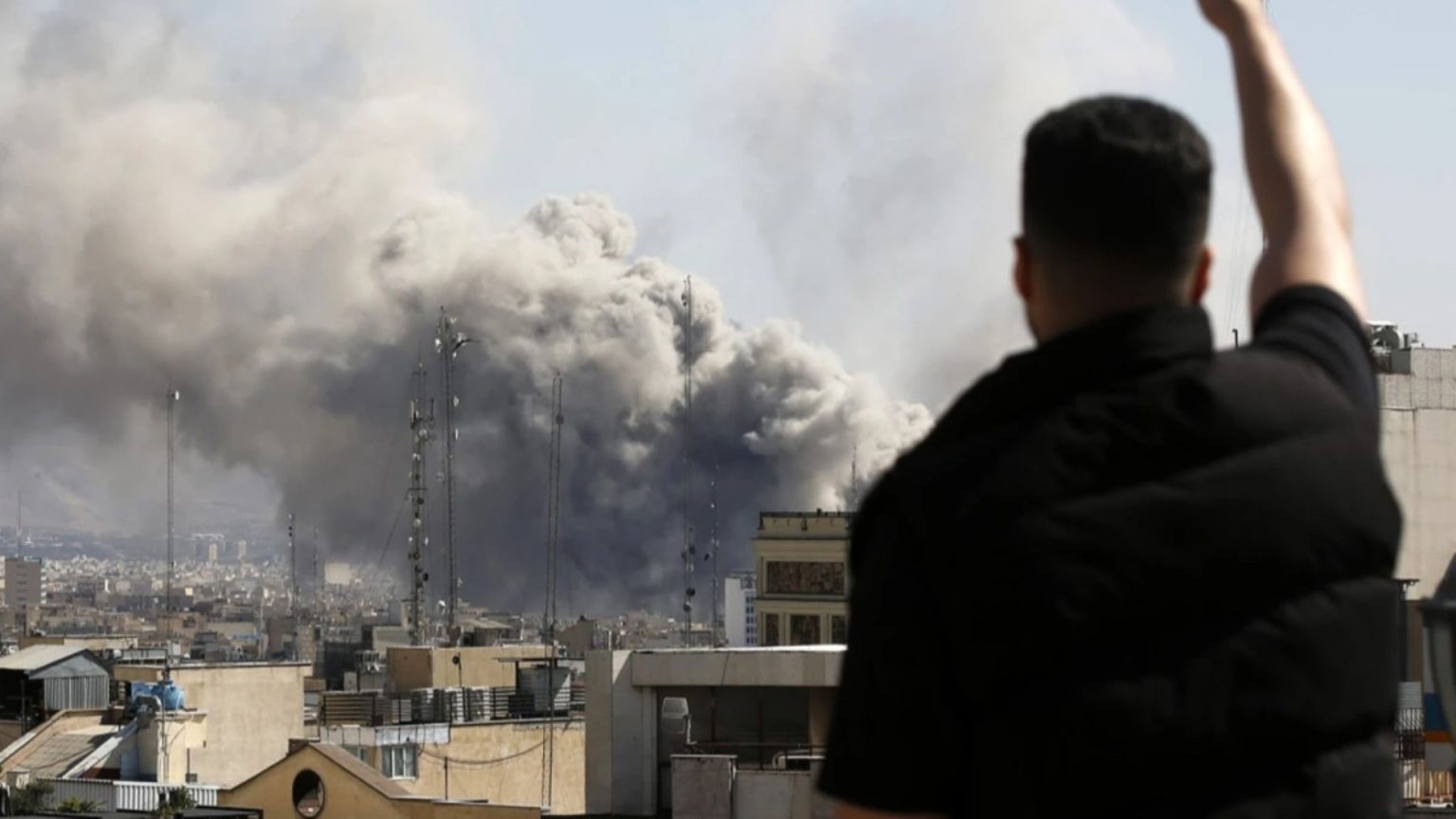
The scale of the initial assault was staggering. In the first week alone, United States forces reportedly struck more than 3,000 targets in an operation codenamed Epic Fury. Black smoke billowed across Tehran’s skyline as military installations, command centres and strategic facilities were hit.
But wars rarely unfold with surgical precision. Reports from within Iran suggest that civilian casualties were significant. Particularly disturbing were accounts that a strike in southern Iran hit a girls’ school, resulting in heavy casualties among students and staff. Such incidents underscore the brutal reality that even the most carefully planned military campaigns often exact their greatest toll on civilians.
The Israeli military has continued to carry out waves of airstrikes on Iranian facilities, including installations linked to the IRGC’s satellite and space command. Israeli officials insist that these attacks are part of a broader effort to dismantle Iran’s missile infrastructure, weaken its air-defence systems and degrade its ability to coordinate military operations.
Yet Iran has responded in kind. Tehran has launched waves of missile and drone attacks targeting Israeli territory as well as military installations associated with American forces across the Gulf. Several bases hosting United States troops have reportedly come under threat, signalling Iran’s determination to raise the strategic cost of the assault against it.
The conflict has quickly escalated beyond Iran’s immediate region. Iran-supported Hezbollah has joined the fighting, launching rockets and drones at Israel from Lebanese territory. Israel’s response has been rapid and destructive, with extensive airstrikes hitting Beirut and southern Lebanon. Hundreds have been killed, and nearly 700,000 people have been displaced, many of them children.
Lebanon—already crippled by economic collapse and political paralysis—has once again found itself on the front lines of a conflict not of its making.
The most alarming development, however, may lie not on the battlefield but in the waters of the Persian Gulf. Iran has effectively shut down the Strait of Hormuz, the narrow waterway through which nearly one-fifth of the world’s oil supply passes every day. By threatening commercial shipping and creating conditions too dangerous for tanker traffic, Tehran has disrupted one of the most vital arteries of the global economy.
The consequences have been immediate. Roughly 20 million barrels of oil per day are affected, sending crude prices surging above $100 per barrel. Global shipping routes are under strain, insurance costs for tankers are rising sharply, and energy markets are reacting with mounting alarm. This is no longer simply a military confrontation between Iran and its adversaries. It is a geopolitical crisis with global economic implications.
Across the Middle East, tensions are rising. Iranian-aligned militias in Iraq, Syria and Yemen are weighing their responses. Gulf States now find themselves within range of Iranian missile and drone attacks. Dubai—long regarded as one of the region’s safest and most stable economic hubs—has already felt the tremors of the war. Missile debris has reportedly fallen in parts of the United Arab Emirates, damaging property and injuring civilians.
The economic impact has been immediate. Dubai International Airport, one of the busiest aviation hubs in the world, has experienced disruptions as airlines cancel or reroute flights due to increasing risks in regional airspace. Financial markets across the Gulf have reacted nervously, with sharp declines in stock exchanges in both Dubai and Abu Dhabi.
The war’s shockwaves are now reverberating far beyond the Middle East.
For Nigeria, the crisis presents a stark reminder of the vulnerabilities created by economic dependence on global oil markets. In theory, rising oil prices could boost Nigeria’s export earnings. As Africa’s leading oil producer, the country stands to benefit from higher crude prices on the international market. Yet the reality is more complicated.
Nigeria remains heavily dependent on imported refined petroleum products. As global crude prices rise, so too does the cost of refined fuel. The result is a familiar and painful chain reaction: higher transport costs, rising food prices and renewed inflationary pressure across the economy.
Already, motorists across Nigerian cities can be seen scrambling for fuel at filling stations. Informal traders have begun hawking petrol along highways—often of questionable quality—while prices for transportation, goods, and services continue to climb, complicating economic struggles for many Nigerians.
History repeatedly reminds us that wars rarely remain confined to their original objectives. What begins as a limited military operation can rapidly expand into a conflict that reshapes entire regions.
The present war appears to be following that familiar pattern. Iran’s influence extends far beyond its borders through a network of allied militias and proxy forces. Any confrontation with Tehran, therefore, carries the risk of igniting multiple fronts simultaneously. Lebanon may only be the first country drawn deeper into the conflict’s widening orbit.
For the international community, the lesson is clear. Middle Eastern conflicts are rarely isolated events; they are entangled in a complex web of alliances, rivalries and historical grievances. Once escalation begins, controlling its trajectory becomes increasingly difficult.
The world now faces a dangerous moment. What began as a series of targeted strikes against Iran risks evolving into a broader regional war with economic and geopolitical consequences reverberating for years.
For Nigeria, the crisis carries a sobering message. The recurring shocks of the global oil market—from wars to sanctions to supply disruptions—highlight the urgent need for economic diversification and domestic refining capacity.
Wars are easy to start, but history shows they are far harder to contain. The real danger now is not the war that has begun in Iran, but the larger one that may yet follow. A war thousands of kilometres away in the Persian Gulf has already translated into hardship in Nigeria, from Lagos to Abuja, Port Harcourt and other Nigerian cities. The lesson is clear: in a fragile and interconnected world, distant wars are never truly distant. The missiles may fall in the Middle East, but their consequences will be felt everywhere.
Until Nigeria breaks the cycle of exporting crude oil while importing the refined fuel that powers its economy, every tremor in distant waters such as the Strait of Hormuz will continue to reverberate through the nation’s economic life.
To be continued tomorrow.
In this article