
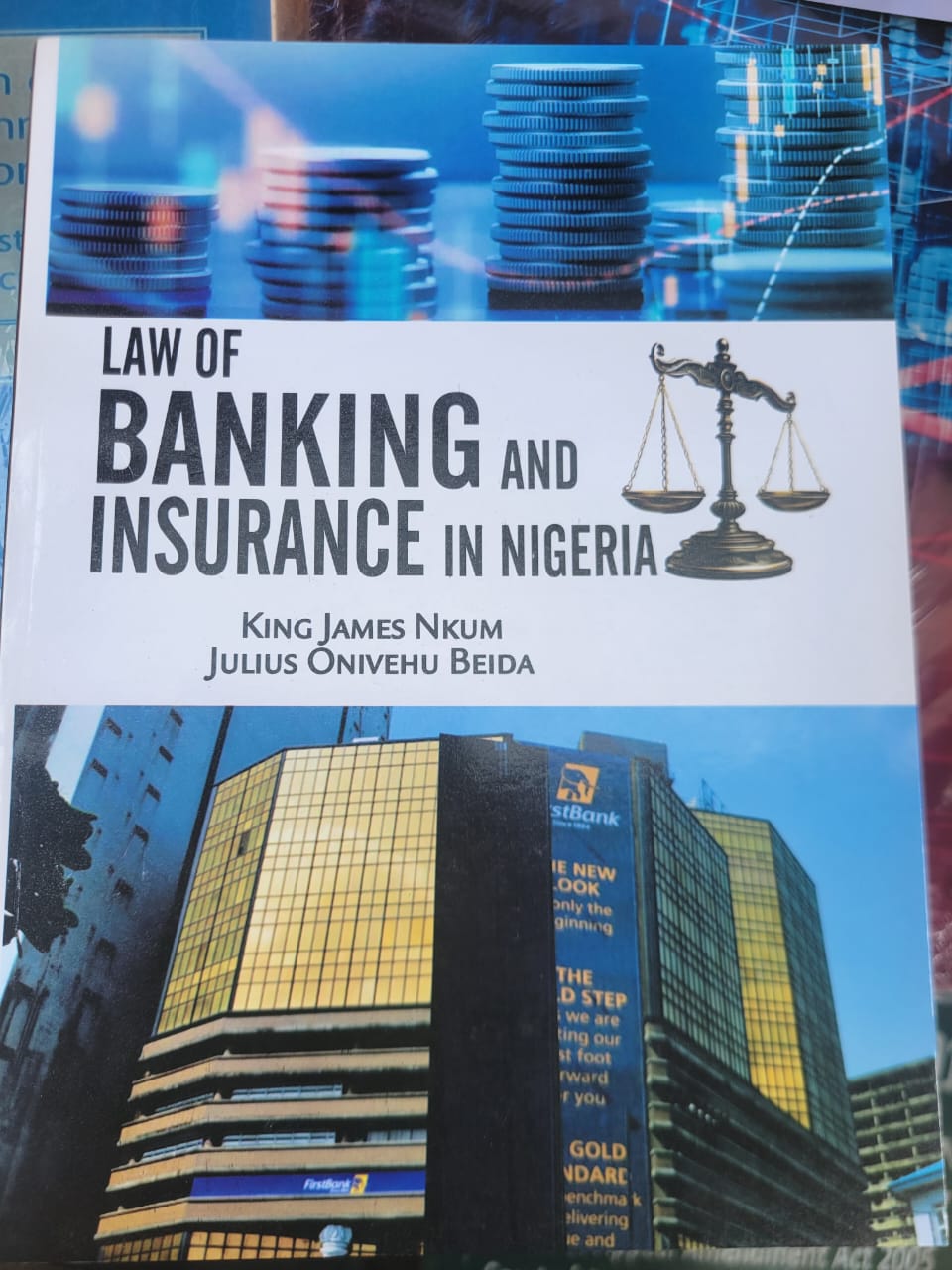
An appraisal of NDIC V. Okem Enterprises Ltd & Anor and Heritage Bank Ltd V. Bentworth Finance Nig. Ltd
By Lydia Ehisuoria Ohonsi, Esq.
ABSTRACT
This article examines two landmark decisions of the Supreme Court of Nigeria — NDIC v. Okem Enterprises Ltd & Anor1 and Heritage Bank Ltd v. Bentworth Finance Nig. Ltd2 — to distil the governing principles of negligence in banking transactions and to map the constitutional and statutory boundaries of the jurisdictional competence of the Federal High Court and State High Courts over banker-customer disputes. The article argues that while the Supreme Court has progressively articulated a coherent duty-of-care framework applicable to Nigerian banks, the jurisdictional landscape remains contested, with competing constitutional provisions generating interpretive tensions that courts have not entirely resolved. The article advocates for legislative clarity and calls for the development of a unified banker-customer liability code in Nigeria.
INTRODUCTION
The banking industry occupies a position of singular importance in the economic order of any modern state. In Nigeria, the relationship between a bank and its customer has generated extensive litigation, touching not only on the contractual obligations arising from the deposit of funds but also on the tortious liability of banks in negligence,
the statutory frameworks governing financial institutions, and the allocation of jurisdiction between superior courts.
Two decisions of the Supreme Court stand as particularly authoritative contributions to these evolving jurisprudential fields. In NDIC v. Okem Enterprises Ltd & Anor, the apex court was confronted with the questions of whether the Federal High Court possessed exclusive jurisdiction over claims involving the Nigerian Deposit Insurance Corporation (NDIC) and a failed bank, and whether the tortious standard of care applicable to banking operations had been breached.
In Heritage Bank Ltd v. Bentworth Finance Nig. Ltd2, the Supreme Court again had occasion to examine the juridical nature of the banker-customer relationship and to determine the proper jurisdictional forum for the resolution of banking disputes involving federally regulated financial institutions. Together, these decisions constitute the twin pillars of the modern law of banking negligence and jurisdiction in Nigeria.
This article proceeds in five parts. Part II examines the nature and elements of the banker-customer relationship in Nigerian law. Part III distils the Supreme Court principles on negligence in banking transactions as elaborated in the two cases. Part IV analyses the constitutional and statutory basis for the jurisdiction of the Federal High Court and State High Courts in banker-customer disputes. Part V offers a critical appraisal of the cases and suggests reforms.
THE BANKER-CUSTOMER RELATIONSHIP IN NIGERIAN LAW
2.1 Nature and Incidents of the Relationship
The relationship between a bank and its customer is fundamentally contractual in origin, arising from the act of opening an account, securing a facility, or otherwise transacting with the bank. The relationship is, however, sui generis: it blends the law of contract, the law of agency, the law of bailment, and increasingly, the law of tort.
The Federal High Court Act confers jurisdiction on that court over matters arising from banking transactions,3 while the Banks and Other Financial Institutions Act (BOFIA) and the CBN Act establish the regulatory framework within which banks operate. The Supreme Court has held, following English authority, that the primary obligation of a bank is to honour the mandate of its customer and to exercise reasonable care and skill in the discharge of that mandate.
2.2 Fiduciary and Tortious Dimensions
Beyond contract, the banker-customer relationship may, in appropriate circumstances, give rise to fiduciary obligations and tortious liability. Where a bank voluntarily assumes responsibility for investment advice, information, or management of assets, it may owe a duty of care sounding in the tort of negligence to its customer. This was the insight of the House of Lords in Donoghue v Stevenson,
4 refined in the Caparo tripartite test of foreseeability, proximity, and reasonableness,5 and extended to professional advisors and bankers in Hedley Byrne & Co Ltd v Heller & Partners Ltd.6 Nigerian courts have received these principles with approval, adapting them to the domestic banking environment.
SUPREME COURT PRINCIPLES ON NEGLIGENCE IN BANKING TRANSACTIONS
3.1 NDIC v. Okem Enterprises Ltd & Anor: The Framework
In NDIC v. Okem Enterprises Ltd & Anor, the Supreme Court, per Uwaifo JSC, comprehensively examined the standard of care owed by a financial institution and its liquidator to depositors and creditors of a failed bank. The court held that a bank, in the discharge of its statutory and contractual duties, owes a duty of care not only to its customers but also to third parties whose financial interests are foreseeably affected by the bank’s operations.7
Kalgo JSC, in his concurring judgment, emphasised that the negligence of a bank must be assessed against the standard of a reasonable, competent banker exercising ordinary professional care and skill. Mere error of judgment is not sufficient to found liability; what is required is a departure from the standard of conduct expected of a prudent banker in similar circumstances.8
3.2 Specific Principles Enunciated
From the decision in NDIC v. Okem, the following principles may be distilled:
(i) Duty of Care of Banks: A bank owes a duty of care in negligence to its customers and, in appropriate circumstances, to third parties. The existence of the duty depends on the proximity of the relationship, the foreseeability of harm, and whether it is just and reasonable to impose such a duty.
(ii) Standard of Care: The standard of care required of a bank is that of a reasonably competent banker. In honouring cheques, processing transfers, and managing accounts, a bank must exercise the care and skill ordinarily expected of a reasonably efficient and diligent bank. This standard is informed by banking custom and practice as well as statute.
(iii) Application of Banking Custom: The court, following the principle in Bank of England v. Vagliano Brothers,9 held that the Bills of Exchange Act and banking statutes must be construed in the light of their ordinary meaning, unaffected by prior case law, but that banking customs and usages remain relevant in determining whether a bank has acted negligently.
(iv) Causation: The breach of duty must be the effective cause of the loss suffered. Remote or speculative causation will not suffice. The court applied the “but for” test in determining whether the negligence of the bank or its liquidator caused the financial loss complained of.
(v) Liability of Statutory Agents: The NDIC, as the statutory liquidator of a failed bank, inherits the tortious liabilities of that bank to the extent they are provable in the liquidation and actionable under the relevant legislation. The court held that the NDIC cannot hide behind its statutory cloak to escape liability for pre-existing negligence.
3.3 Heritage Bank Ltd v. Bentworth Finance Nig. Ltd: Refinements
In Heritage Bank Ltd v. Bentworth Finance Nig. Ltd, the Supreme Court was presented with a more nuanced scenario involving the alleged negligent management of credit facilities and the wrongful application of customer funds. Eko JSC, delivering the lead judgment, reaffirmed the principles in Okem and extended them to cover the negligent grant of credit, the negligent handling of securities, and the wrongful debiting of accounts.10
The court held that a bank that negligently applies the proceeds of a facility contrary to the mandate of the customer, or that fails to protect collateral entrusted to it, may be held liable both in contract and in the tort of negligence, and the concurrent liability does not diminish the customer’s right to election.11
3.4 Synthesis: The Nigerian Banker’s Duty of Care
Drawing from both decisions, the Nigerian Supreme Court has established the following composite principles governing the banker’s duty of care:
First, the duty of care of a bank is non-delegable: a bank cannot escape liability for the negligence of its agents or correspondents by pointing to the acts of third parties in the payment chain.
Second, the duty extends temporally across the lifecycle of a banking relationship — from the opening of an account to its closure, through the grant and management of credit, to the realisation of security.
Third, in the context of failed banks and insolvency, the duty of care persists and is transmitted to the statutory managers and liquidators appointed under the NDIC Act and BOFIA.
Fourth, the contributory negligence of the customer may reduce but not extinguish liability, in accordance with the apportionment principles under Nigerian tort law.
Fifth, damages in banking negligence cases must be assessed against the actual financial loss suffered, and courts must guard against awards that would result in the unjust enrichment of the claimant.
JURISDICTION OF THE FEDERAL HIGH COURT AND HIGH COURTS IN BANKER-CUSTOMER DISPUTES
4.1 The Constitutional Framework
Section 251(1)(d) of the Constitution of the Federal Republic of Nigeria 1999 (as amended) vests in the Federal High Court exclusive original jurisdiction over matters arising from banking, banking practice, and the establishment of financial institutions.12 The interpretation of this provision has been the subject of substantial judicial controversy, particularly where claims blend contractual, tortious, and regulatory elements.
4.2 NDIC v. Okem: Exclusivity and Its Limits
In NDIC v. Okem, the Supreme Court was asked whether the Federal High Court had exclusive jurisdiction over all claims involving the NDIC and the affairs of a failed bank. Uwaifo JSC, in a nuanced and closely reasoned judgment, held that the Federal High Court’s jurisdiction under Section 251(1)(d) is indeed exclusive but must be read in conjunction with the subject matter of the claim.13
The court distinguished between claims arising from the regulation of banking and claims arising from the private law relationship between a bank and its customer. While regulatory and supervisory disputes properly fall within the exclusive Federal High Court jurisdiction, tortious claims for damages by a customer against a bank may, depending on the nature of the claim and the parties involved, be properly commenced in the State High Court, whose residual jurisdiction under Section 272 of the Constitution remains intact.14
The apex court articulated the test as follows: the determinant of jurisdiction is not the identity of the parties but the subject matter of the suit. A claim that is essentially tortious or contractual in nature, even if one of the parties is a bank regulated by federal statute, does not automatically attract the exclusive jurisdiction of the Federal High Court; the claim must arise from banking and banking practice in the regulatory or institutional sense.15
4.3 Heritage Bank v. Bentworth: Consolidation of Principles
In Heritage Bank v. Bentworth Finance Nig. Ltd, the Supreme Court revisited the jurisdictional question in the context of a claim by a finance company against its banker for wrongful application of funds and breach of mandate. The court held that where the subject matter of a claim involves the practice of banking, the grant of banking facilities, and the management of banking relationships, the Federal High Court is the appropriate forum.16
However, Eko JSC cautioned that courts must not engage in jurisdictional imperialism: not every dispute in which a bank is involved is a banking dispute for the purposes of the Federal High Court’s jurisdiction. Where the claim is purely for damages in contract or tort, and the banking character of the dispute is incidental or circumstantial, the State High Court retains jurisdiction.17
The court further held that the Federal High Court’s jurisdiction in banking matters is derived from the regulatory primacy of the Federal Government over banking and finance, and its invocation must be grounded in the substantive banking character of the dispute, not merely in the fact that one of the parties holds a banking licence.18
4.4 The Role of the NDIC Act
The NDIC Act19 confers specific jurisdiction on the Federal High Court in matters involving the liquidation of insured banks and the administration of the Deposit Insurance Fund.20 The Supreme Court in NDIC v. Okem held that this specific legislative grant of jurisdiction is consistent with and complementary to the constitutional allocation under Section 251(1)(d), and that claims against the NDIC in the exercise of its statutory functions as liquidator are cognisable exclusively in the Federal High Court.21
4.5 State High Courts: Residual Jurisdiction
In Heritage Bank v. Bentworth, the court confirmed that State High Courts retain jurisdiction over banker-customer disputes that are essentially contractual or tortious in character and do not implicate the regulatory or institutional aspects of banking. This includes ordinary claims for wrongful dishonour of cheques, unlawful debiting of accounts, negligent advice, and breach of banker’s duty of confidentiality.22
This residual jurisdiction is particularly significant in jurisdictions where the Federal High Court is overloaded and where parties may face practical difficulties in prosecuting their claims before that court. The Supreme Court has been careful not to judicially divest State High Courts of jurisdiction that the Constitution has not, by its clear terms, removed from them.23
CRITICAL APPRAISAL AND REFORM PROPOSALS
5.1 Strengths of the Supreme Court’s Approach
The decisions in Okem and Heritage Bank represent a commendable effort by the Supreme Court to bring clarity to a field of law that is both technically complex and practically consequential. The court’s insistence on the subject-matter test for jurisdiction, rather than a purely parties-based approach, reflects sound constitutional methodology and prevents the Federal High Court from being deployed as a jurisdictional monopoly over all financial disputes.
The articulation of the banker’s duty of care in terms that mirror the Caparo framework, adapted to the Nigerian context, ensures consistency with the broader common law of negligence while accommodating the unique regulatory environment of Nigerian banking.
5.2 Tensions and Ambiguities
Notwithstanding these strengths, certain tensions and ambiguities persist. The boundary between “claims arising from banking” and “ordinary tortious or contractual claims involving banks” is not always clear in practice. The CBN Act and BOFIA regulate virtually every aspect of bank operations,24 creating a risk that the Federal High Court’s jurisdiction may be construed expansively to swallow up the residual jurisdiction of State High Courts.
Furthermore, the treatment of the NDIC as a perpetuator of the bank’s liabilities in negligence, while jurisprudentially defensible, creates practical difficulties for the NDIC in its function as a deposit insurer and liquidator. The NDIC Act may need to be amended to clarify the extent to which pre-liquidation tortious claims are provable against the corporation.25
5.3 The Question of Concurrent Liability
Both decisions leave unresolved the question of how courts should handle cases where the claimant alleges both contractual and tortious wrongs arising from the same facts. English authority, following Henderson v. Merrett Syndicates Ltd,26 permits concurrent liability in contract and tort, subject to the terms of the contract not restricting the tortious duty. Nigerian courts have generally followed this approach, but the interaction between concurrent liability, contributory negligence, and statutory limits on bank liability under BOFIA27 warrants more careful judicial analysis.
5.4 Reform Proposals
The following reforms are proposed:
(i) Statutory Clarification of Jurisdiction: The National Assembly should amend the Federal High Court Act and the Constitution to provide a clearer delineation between banking disputes falling within Federal High Court jurisdiction and those remaining with State High Courts. A schedule listing specific categories of banking disputes would assist litigants and reduce satellite litigation on jurisdiction.
(ii) Banker-Customer Liability Code: Nigeria should consider enacting a consolidated Banker-Customer Liability Code that codifies the duty of care, sets out the standard of the prudent banker, establishes clear defences, and prescribes limitation periods specific to banking negligence claims. This would reduce reliance on English common law and ensure that the Code is tailored to Nigerian economic and social conditions.28
(iii) Specialised Banking Court: Consideration should be given to the establishment of a specialised Banking and Finance Division of the Federal High Court, with judges trained in banking and financial law, to adjudicate complex banking disputes with the expertise they require.
(iv) Mandatory Mediation: Given the volume of banker-customer disputes and the commercial imperative of preserving business relationships, the procedural rules of the Federal High Court and State High Courts should be amended to require mandatory pre-trial mediation in banking disputes, with litigation as a last resort.
CONCLUSION
The decisions of the Supreme Court in NDIC v. Okem Enterprises Ltd & Anor and Heritage Bank Ltd v. Bentworth Finance Nig. Ltd represent landmark contributions to Nigerian banking law. They have established that banks owe a duty of care in negligence to their customers and to foreseeably affected third parties, measured against the standard of the prudent banker; that this duty travels with the bank into insolvency and attaches to statutory liquidators; and that the subject matter of a claim, not the identity of the parties, is the touchstone for determining whether the Federal High Court or a State High Court has jurisdiction.29
The apex court’s jurisprudence has provided a workable framework for the resolution of banking disputes, though the boundaries it has drawn are not without ambiguity. Legislative action, in the form of a consolidated banking liability code and a clearer constitutional delineation of judicial jurisdiction, would strengthen the institutional architecture within which these principles operate.30
As Nigeria’s financial sector continues to develop and as digital banking, fintech, and cross-border transactions generate new legal challenges, the foundational principles established in these decisions will remain indispensable — a testament to the enduring importance of a thoughtful, context-sensitive judicial approach to the resolution of financial disputes.
SELECT BIBLIOGRAPHY
Cases
NDIC v. Okem Enterprises Ltd & Anor (2004) 10 NWLR (Pt. 880) 107 (SC)
Heritage Bank Ltd v. Bentworth Finance Nig. Ltd [2019] 14 NWLR (Pt. 1693) 401 (SC)
Savannah Bank v. Ajilo [1989] 1 NWLR (Pt. 97) 305 (SC)
Afribank Nigeria Plc v. Akwara [2006] 5 NWLR (Pt. 974) 619 (SC)
Tukur v. Government of Taraba State [1997] 6 NWLR (Pt. 510) 549 (SC)
African Continental Bank v. Yesufu [1976] 2 ALL NLR (Pt. 1) 117
Seismograph Service (Nig.) Ltd v. Mark [1993] 7 NWLR (Pt. 304) 203
Aguta v. Alhaji Ibrahim Wamako [2020] 17 NWLR (Pt. 1753) 309
Ejikeme v. Okonkwo [2010] 2 NWLR (Pt. 1179) 618
Donoghue v Stevenson [1932] AC 562 (HL)
Caparo Industries plc v Dickman [1990] 2 AC 605 (HL)
Hedley Byrne & Co Ltd v Heller & Partners Ltd [1964] AC 465 (HL)
Henderson v. Merrett Syndicates Ltd [1994] 3 All ER 506 (HL)
Bank of England v. Vagliano Brothers [1891] AC 107 (HL)
Legislation
Constitution of the Federal Republic of Nigeria 1999 (as amended)
Banks and Other Financial Institutions Act (BOFIA) 2020
Central Bank of Nigeria Act 2007
Nigerian Deposit Insurance Corporation Act, Cap. N102, LFN 2004 (as amended 2023)
Federal High Court Act, Cap. F12, Laws of the Federation of Nigeria 2004
Federal High Court (Civil Procedure) Rules 2019
Secondary Sources
P.O. Idornigie, “Banker-Customer Relations and the Law in Nigeria” (2001) 1 Nigerian Bar Journal 45
B.O. Nwabueze, Nigerian Land Law (Nwamife Publishers, 1972)
E.I. Nweze, “The Duty of Care of Banks in Nigeria: An Appraisal of Recent Supreme Court Decisions” (2020) 15 Journal of Commercial Law in Nigeria 22
O.A. Adesanya, “Jurisdiction of the Federal High Court in Banking Disputes: A Critical Review” (2018) 10 University of Lagos Law Review 89
F.O. Okafor, Banking Law and Practice in Nigeria (Mbeyi & Associates, Lagos, 2015)
Lydia Ehisuoria Ohonsi, Esq. is a Barrister and Solicitor of the Supreme Court of Nigeria
March 2026.
info@kohlleedslegal.ng.
In this article