
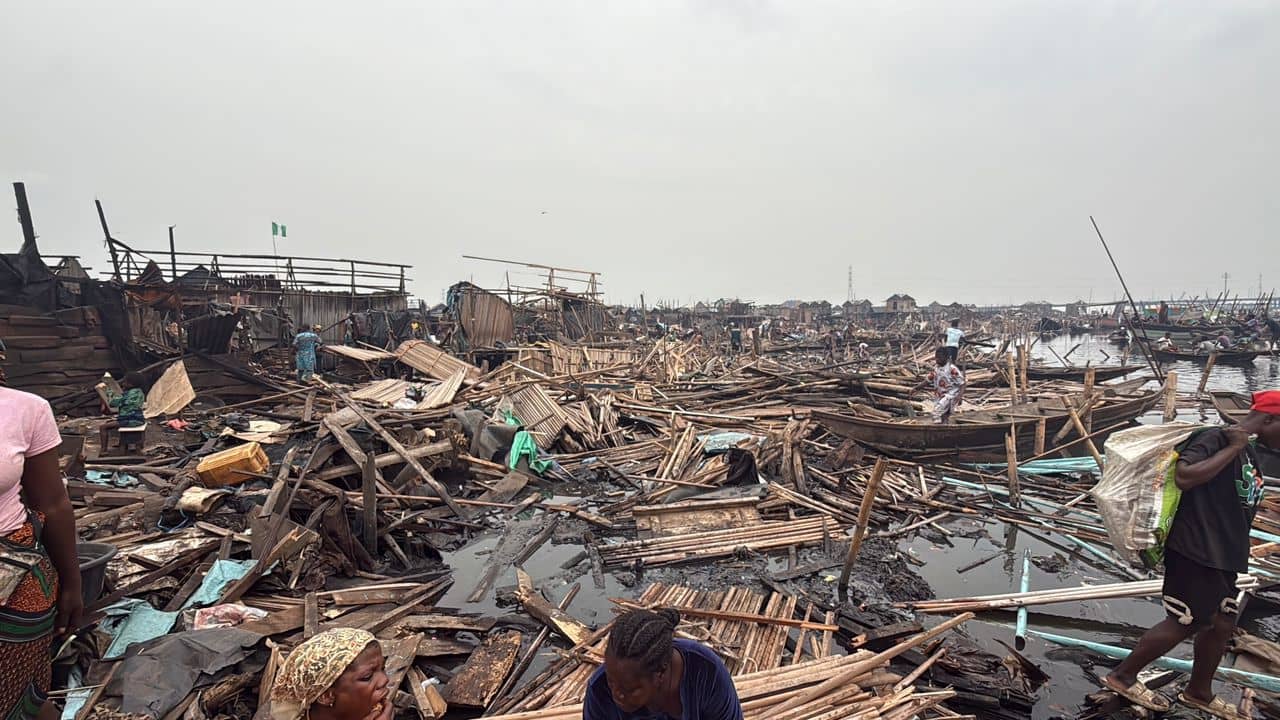
The Lagos State Government has defended its demolition of structures in Makoko and other waterfront communities, stating that the exercise is aimed at protecting lives, property, and public safety.
Government officials made this known on Saturday during Ask Lagos, a weekly X-space discussion designed to foster engagement between the state government and residents.
The session featured the Commissioner for Information and Strategy, Mr. Gbenga Omotoso, and the Special Adviser to the Governor on e-GIS and Urban Development, Mr. Olajide Abiodun Babatunde.
Addressing concerns over the demolitions, Omotoso said the actions were driven by safety, environmental, and security considerations, particularly the risks posed by illegal structures built beneath high-tension power lines and along waterways.
“No responsible government can allow people to live directly under high-tension cables or obstruct vital waterways,” Omotoso said, adding that the measures were preventive rather than punitive.
He also countered claims that affected residents were not notified, stating that the government had engaged the communities for more than five years.
According to him, existing regulations require buildings to be at least 250 metres away from power lines, but many structures were constructed within restricted zones.
“The danger is enormous. If a power line falls into the lagoon, the disaster could be unimaginable,” he warned.
Mr. Babatunde described the demolitions as part of a broader urban regeneration strategy aimed at making Lagos a safer and more sustainable megacity.
He cited the relocation of residents from Oko Baba to newly developed housing estates as an example of government intervention, noting that hundreds of housing units had been provided for displaced persons.
He encouraged residents and developers to comply with planning regulations, emphasising the importance of sustainable urban development.
During the discussion, some participants raised concerns about alleged casualties, excessive enforcement, inadequate compensation, and unclear relocation plans.
Others highlighted the emotional impact on affected residents.
Responding, Omotoso urged the public to avoid speculation and focus on verified information. At the same time, Babatunde noted that the government’s e-GIS platforms enable residents to verify zoning and setback requirements in advance.
Despite criticism from some residents and civil society groups who describe the demolitions as discriminatory or anti-poor, government officials maintain that the measures are necessary to prevent larger safety and environmental disasters.
In this article