
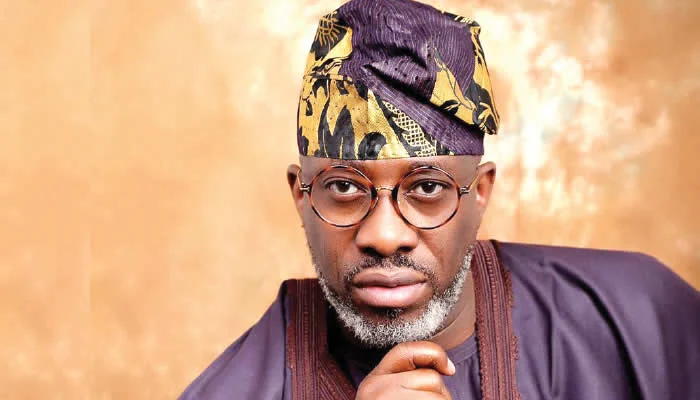
An Ogun State chieftain of the Peoples Democratic Party, Segun Showunmi, has condemned alleged corrupt individuals tagging their investigation or prosecution by the anti-graft agencies as persecution or victimisation because they are opposition party members.
Showunmi said that Nigeria’s democracy is not under threat because public officials are being investigated, but because political actors are attempting to weaponise opposition status as immunity from the law.
The PDP chieftain disclosed that “whereas opposition is not a licence to steal and not a shield against accountability.”
Showunmi, in a statement on Monday, said that “calling an investigation ‘victimisation’ does not make it so but only signals an attempt to pre-empt justice with propaganda.
He explained that the nation’s constitution is emphatic that nobody is above the law and also mandates the state to abolish corruption and abuse of power with no exemptions for opposition leaders, former office holders, or political coalitions.
Showunmi said, “The only immunity recognised by law is limited, specific, and temporary, and it ends when a public officer leaves office. To suggest otherwise is to invent a privilege unknown to the Constitution.”
He disclosed further that the EFCC and other anti-graft agencies are legally bound to investigate allegations of economic and financial crimes.
Showunmi said, “Investigation, arrest, and prosecution when carried out within the law do not violate fundamental rights. This is settled by the Supreme Court, not by political press conferences.”
The PDP chieftain revealed that presumption of innocence does not mean no one can be investigated, questioned, or charged, adding that if you are innocent, the courts will clear you. If you are not, the law will take its course. That is the essence of the rule of law.
He added, “The argument that ‘others are also corrupt’ is unknown to Nigerian law. Courts have consistently held that the alleged wrongdoing of others does not excuse or absolve an accused person.
“Accountability is personal. Justice is individual. Guilt is not suspended because someone else has not yet been charged.
“What truly threatens Nigeria’s multiparty democracy is not the EFCC doing its job, but the growing attempt to intimidate, delegitimise, or blackmail anti-corruption institutions whenever investigations touch politically exposed persons.
“Democracy does not mean freedom from scrutiny. It means submission to the law, especially by those who once held public trust. Transparency is welcome, but it must not be weaponised as a diversion. Nigeria already has constitutionally and statutorily empowered institutions to audit, investigate, and prosecute financial crimes.
“Creating parallel structures to undermine lawful investigations or discredit prosecutions is not reform; it is evasion. Public office is a trust. When that trust is breached, consequences follow. The appropriate response to an investigation is not alarmism, not international lobbying, and not political noise. It is competent legal defence and respect for due process.”
Corruption remains a major issue in Nigeria, characterised by bribery in public services, embezzlement, and a lack of accountability across institutions like the police, judiciary, and government.
An August 2025 Chatham House publication said that globally, the country consistently ranks among the top quarter of most corrupt countries.It added that Nigeria is ranked among the world’s 40 most corrupt countries on the Corruption Perceptions Index and 35th from bottom on the World Bank’s list of countries measured by their control of corruption.
It ranks highly on all four metrics of corruption measured by The Unbundled Corruption Index, with ‘grand theft’ by political elites particularly dominating.
In this article